

Blockchain mining is at the heart of digital currencies. It uses math to verify transactions, not banks. This way, trust is built through numbers, not a single authority.
The cryptocurrency validation process is a race. Miners solve hard puzzles to add new blocks. The first one to solve it gets to add the block.
Looking at mining blockchain securing alongside navigating world tech alt gives a clearer view of the wider topic.
This system keeps the network safe and honest. It stops anyone from spending the same money twice. Miners get new coins and fees for their work, making the network strong.
This blockchain mining definition shows how digital currencies work together. It’s a clever way to trust each other without a central boss.
Understanding Blockchain Mining Fundamentals
Blockchain mining is key to cryptocurrency networks. It validates transactions and keeps the ledger safe. This ensures all transactions are checked and the ledger stays secure.
Definition and Purpose of Mining
Mining is the process where people check transactions and add new blocks. It has three main roles in blockchain systems.
First, miners check transactions to stop fraud. They make sure each transaction follows the network’s rules and the blockchain’s history.
Second, mining keeps the blockchain linked through cryptography. Each new block links to the previous one, making a chain of verified transactions.
Related Posts:
- What Is Remote Technology Tools for Telework and…

- How Technology Is Helpful for Students Enhancing…

- The Advantages of Modern Technology Efficiency and…

- What Is DOCSIS 3.1 Technology Faster Cable Internet Speeds

- How Technological Innovation Leads to Obsolescence…

- What Is HCI in Information Technology Human-Computer…

Third, mining allows new blocks for more transactions. Miners who succeed get Bitcoin rewards for their work and energy.
This proof of work consensus lets everyone agree on transactions without a central authority.
Historical Development of Mining Techniques
Mining technology has evolved a lot. At first, people used regular computers to mine. Later, special equipment became necessary.
Early on, people used CPUs in everyday computers. These worked well when the network was small and easy.
Then, GPUs took over because they could do the needed calculations faster. They were better at the complex tasks of mining.
Next came FPGAs, which were custom-made for mining. They were more efficient than GPUs and used less power.
Now, ASICs are the top choice for professional miners. They are made just for mining and are very efficient.
The mining evolution timeline shows how mining has become more secure and complex. Today, mining is like running a data centre, not just a hobby.
| Mining Era | Primary Technology | Approximate Hash Rate | Energy Efficiency |
|---|---|---|---|
| 2009-2010 | CPU Mining | 1-100 MH/s | Low |
| 2010-2012 | GPU Mining | 100-500 MH/s | Moderate |
| 2012-2013 | FPGA Mining | 500 MH/s-1 GH/s | Good |
| 2013-Present | ASIC Mining | 1-100 TH/s | Excellent |
This evolution has made mining harder and more professional. The proof of work consensus has kept the network secure through these changes.
Today, mining uses big facilities with special cooling and power setups. The ongoing development of mining tech shows the creativity of the cryptocurrency world.
What Is Mining in Blockchain Technology: Essential Elements
Blockchain mining involves several key parts that keep the network safe. These parts have grown from simple computers to complex systems.
Key Participants: Miners and Their Functions
Miners are vital to blockchain networks. They check transactions and add them to a public record. This work is very complex.
Types of Mining Hardware Utilised
Over time, mining tools have gotten much better. At first, people used regular CPUs. Now, they need special gear to keep up.
ASIC miners are now the top choice. They are made just for mining and work much better than regular computers.
- CPU mining – Basic computer processors
- GPU mining – Graphics processing units
- FPGA mining – Field-programmable gate arrays
- ASIC mining – Dedicated mining circuits
| Hardware Type | Hash Rate | Power Consumption | Cost Efficiency |
|---|---|---|---|
| CPU | Low | Moderate | Poor |
| GPU | Medium | High | Average |
| ASIC | Very High | Very High | Excellent |
Software Tools for Efficient Mining
Mining software connects hardware to blockchain networks. It manages mining and checks how well it’s doing. It also handles important tasks like calculating hashes and keeping an eye on temperature.
Advanced tools give real-time data and let miners control their setups from anywhere. This helps them work more efficiently and make more money.
Mining Approaches: Individual and Collaborative Efforts
Miners can work alone or with others. Each way has its own benefits, depending on what the miner wants.
Working alone means full control but costs a lot. Mining pool participation offers steady income by sharing resources.
“Pool mining makes it easier for everyone to get rewards, even those with less power.”
Most miners choose to work in pools. This way, they get more consistent rewards and face less risk.
Whether to mine alone or with others depends on several things:
- How much computing power you have
- What electricity costs
- How much risk you’re willing to take
- How tech-savvy you are
Today’s mining pool participation uses smart systems to share rewards fairly. This makes mining more open to everyone, keeping the network safe and fair.
Even with special gear like ASIC miners, joining a pool is easy. This makes the network more diverse and secure.
The Transaction Validation Process Through Mining
Mining is key to blockchain security. It turns raw transactions into permanent records. This process checks each transaction against network rules.
Stages of Validating Blockchain Transactions
Transactions go through many stages to ensure they’re valid. This keeps the system reliable and trustworthy.
Gathering and Verifying Transaction Data
Miners start by collecting transactions from the mempool. This is a temporary area for unconfirmed transactions. They check each transaction against rules to verify digital signatures and funds.
This step stops bad transactions from wasting resources. Only good transactions move forward.
Constructing Blocks and Applying Hash Functions
Good transactions are put into blocks. Miners choose blocks with higher fees first. Each block has important data like the previous block’s hash and a timestamp.
Miners use SHA256 to create a unique hash for the block. This hash is like a digital fingerprint for the block.

This hashing makes it easy to spot any changes. It creates a chain of verified information. You can learn more about this in our guide to cryptocurrency transaction verification.
Proof of Work Mechanism in Detail
The proof of work algorithm is complex. Miners solve puzzles to add new blocks. This process is very energy-intensive.
Cryptographic Puzzle Solving Techniques
Miners look for a nonce that makes the block’s hash meet certain criteria. For Bitcoin, this means finding a hash with leading zeros.
The process involves:
- Trying different nonce values
- Creating hashes for each try
- Checking if the hash meets the target
- Trying again until it works
This method is hard and requires a lot of computing power. It makes attacks too expensive and rewards honest miners.
Adjusting Difficulty for Network Stability
The network adjusts mining difficulty every 2,016 blocks. This keeps block times consistent. The network difficulty adjustment ensures blocks are added every ten minutes.
The algorithm looks at:
| Factor | Purpose | Impact |
|---|---|---|
| Total network hash rate | Measures collective mining power | Higher hash rate increases difficulty |
| Previous block generation time | Assesses current block timing | Faster blocks trigger difficulty increase |
| Block height | Tracks adjustment intervals | Ensures regular recalibration |
This self-regulating system keeps the blockchain stable. It handles changes in mining power well. It prevents too fast or slow block times.
The mix of puzzle solving and adjusting difficulty makes the system strong. It secures transactions and keeps the network running smoothly.
Security Enhancements Provided by Mining
Blockchain mining is key to keeping networks safe. It builds strong defences that keep systems secure. The hard work of mining adds layers of protection against threats.
Combating Double-Spending and Malicious Activities
Mining stops double-spending by making transaction history hard to change. Each block links to the last through special codes, making the chain unbreakable.
Trying to change a transaction would need redoing all blocks after. This is too hard and expensive for fraudsters.
The proof-of-work system stops bad actors from messing with records. Everyone can trust that once a transaction is done, it’s there for good.
Decentralisation’s Role in Securing the Network
Distributed mining power is a big part of blockchain security features. Unlike systems with one weak point, blockchain spreads power among many miners.
This spread stops any one person or group from taking over. Even if some miners fail or act badly, the network stays safe.
Miners are all over the world, adding more safety. No single disaster or internet problem can take down the whole system.
Consensus Protocols and Resistance to Attacks
Consensus protocols are the heart of blockchain security. They make sure everyone agrees on transactions without needing to trust each other.
Proof-of-work needs lots of computer power to check transactions. This keeps out attacks like sybil attacks and spam.
While 51% attacks are possible, they’re very unlikely. Taking over the network would cost a lot and offer little gain.
| Attack Type | Mining Protection Mechanism | Effectiveness Level |
|---|---|---|
| Double-Spending | Immutable Transaction Chain | Extremely High |
| 51% Attack | Distributed Hashing Power | Very High |
| Sybil Attack | Proof-of-Work Requirement | High |
| Transaction Spam | Transaction Fee Requirements | High |
Mining makes digital transactions safe and reliable. It uses cryptography and rewards to keep threats at bay.
Cryptographic Foundations Supporting Mining
Advanced cryptography is key to making blockchain mining secure and trustworthy. It uses complex math to create digital fingerprints for every transaction and block.
Without strong cryptography, miners can’t do their job well. The system uses complex algorithms to check transactions. It makes sure only real transactions are confirmed and data can’t be changed.
Importance of Hash Functions in Mining
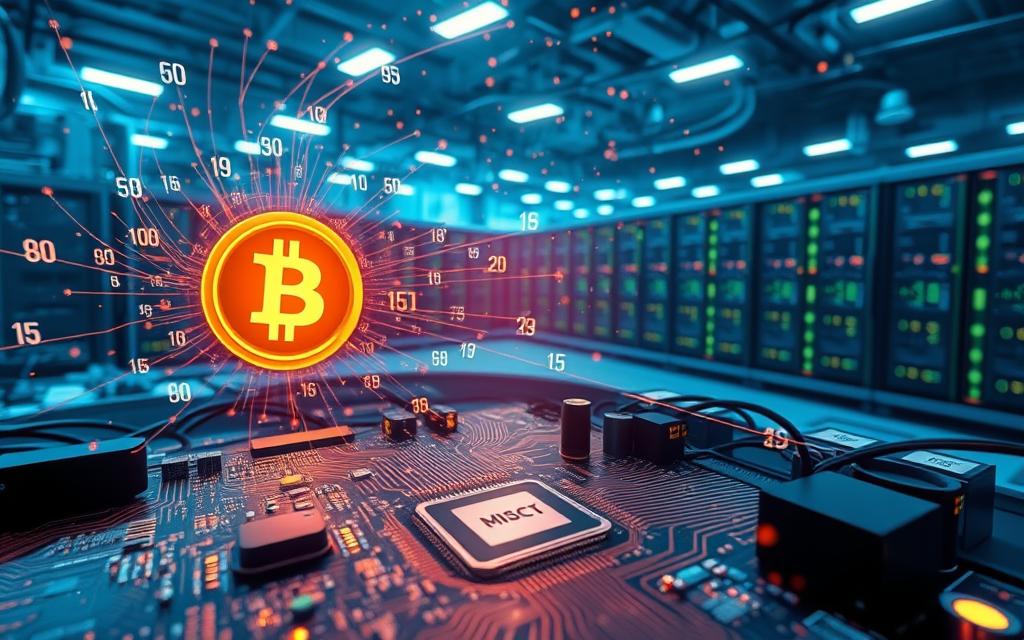
Hash functions are the backbone of blockchain mining. They take any data and turn it into a fixed-size string called a hash value.
The Bitcoin network uses SHA-256 cryptography. It creates a unique 64-digit hexadecimal number for each block. This hash acts as a digital fingerprint for the block’s contents.
Hash functions have key properties for mining:
- Determinism: The same input always produces the same output
- Quick computation: Hashes can be calculated fast
- Pre-image resistance: It’s hard to reverse the output to find the input
- Collision resistance: It’s rare for different inputs to have the same output
Miners must find a hash that meets network criteria. This requires a lot of computing power. Even a small change in input data changes the hash completely.
This makes it clear if someone tries to tamper with data. If a transaction is altered, the hash changes. This alerts the network to fraud.
Ensuring Integrity with Digital Signatures
Hash functions protect block integrity, but digital signatures protect transactions. They verify that transactions come from the right account holders.
Digital signature verification uses public-key cryptography. Each user has a private key for signatures and a public key for verification.
The process starts with a transaction creator making a signature with their private key. This signature is then attached to the transaction data before it’s shared.
Miners verify the signature using the sender’s public key. This confirms the transaction’s authenticity without revealing the private key.
This system stops unauthorized spending and ensures only valid transactions are mined. Digital signatures make it hard for thieves to steal cryptocurrency.
Together, hash functions and digital signatures create a strong security framework. They let miners trust transactions while keeping the blockchain unchangeable.
This combination of cryptography offers a beautiful solution. It allows trustless verification in decentralised networks and protects against many attacks.
Economic Aspects of Mining Incentives
The way blockchain mining works is complex. It balances rewards for miners with keeping the network safe. This ensures miners get paid for their work and the blockchain stays secure.
Reward Structures: Block Rewards and Fees
Miners get paid in two main ways: block rewards and transaction fees. The block reward is the main payment, giving miners new cryptocurrency for validating blocks.
Bitcoin’s reward system is a great example. At first, miners got 50 BTC per block in 2009. But this amount halves every four years. Now, it’s 3.125 BTC and will keep going down until all 21 million bitcoins are out.
Transaction fees are the second way miners make money. As block rewards go down, fees become more important. People pay these fees to get their transactions processed faster.
The move to fee-based rewards is a big change in blockchain economics. It makes mining profitable even when block rewards stop.
Analysing Profitability and Market Dynamics
For mining to be successful, you need to look at many economic factors. Cryptocurrency mining profitability depends on the cost of equipment, electricity, and how much the cryptocurrency is worth.
Miners must compare their costs to what they can earn. Important things to think about include:
- How efficient the hardware is
- How much electricity is used and what it costs
- Changes in network difficulty
- The value of the cryptocurrency
- Fees for working together in mining pools
The market has a big impact on mining. When cryptocurrency prices go up, more people want to mine. But when prices drop, some miners have to stop.
The economic impact of crypto mining is not just on miners. It affects whole areas too. Places with cheap electricity often become mining centers, creating jobs but also using a lot of energy.
Calculating profits is not just about making money now. It’s also about being able to keep mining in the future. Good miners use special tools to watch their performance and adjust their plans as needed.
Knowing how mining works helps people make better choices about investing in it. The balance between costs and rewards is what decides who succeeds in this competitive field.
Challenges Facing Blockchain Mining
Blockchain mining is key to keeping our digital world safe. But, it faces big challenges that need solving. Two main issues are causing a lot of talk in the crypto world and beyond.

Environmental Impact and Energy Usage
The huge mining energy consumption is a big problem. Bitcoin mining alone uses as much electricity as some small countries. This has raised big environmental worries.
The reason for this high energy use is the complex puzzles miners solve. As these puzzles get harder, more electricity is needed to keep the mining rigs running.
The environmental impact goes beyond just energy use. It also includes the carbon emissions from the energy sources used for mining. Areas relying on coal for power produce more emissions than those using green energy.
Risks of Centralisation in Mining Operations
Another big challenge is the mining centralisation risks. What started as a decentralised effort has turned into big industrial operations. This shift has raised concerns.
The making of special Bitcoin mining machines has sped up this centralisation. These machines are so efficient that they’ve left individual miners behind.
Mining pools are also a centralisation issue. These pools combine the power of many miners to increase their chances of getting rewards. While they share the rewards, they also concentrate power in the hands of pool operators.
This concentration of power could lead to problems. If a few big players control most of the mining power, they might try to change transactions or spend coins twice.
The push for efficiency through specialisation is at odds with the idea of a decentralised network. Finding a balance is key to keeping blockchain safe and fair.
Alternative Consensus Models Beyond Mining
Traditional mining is key to many blockchain networks. But new consensus models have come up. They solve mining’s big problems while keeping the network safe and sound.
Overview of Proof of Stake and Other Systems
Proof of stake is a big alternative to mining. Validators use their cryptocurrency to check transactions, not solve puzzles.
Ethereum shows how efficient proof-of-stake can be. It uses much less energy than Bitcoin. Other new models include:
- Proof of Authority: Uses approved validators for faster transactions
- Proof of Space: Leverages storage capacity instead of computational power
- Delegated Proof of Stake: Allows token holders to elect block producers

Comparative Analysis with Traditional Mining
Alternative validation methods are very different from mining. They use much less energy, cutting electricity use by over 99%.
Security is also different. Proof-of-work uses lots of computing power. But proof-of-stake uses financial stakes and risks.
Decentralisation is another big difference. Some systems let more people join, but others might give more power to big players.
Economic models are also different. These new systems often cost less to run and reward people in new ways.
Future Directions for Mining in Blockchain
Blockchain technology is growing, changing mining practices. New tech and rules will shape mining’s future. We’ll see mining operations get better and follow rules in different places.
Technological Innovations Improving Efficiency
New mining technology advancements aim to make mining faster and greener. Next-gen ASICs boost hash rates while using less power. Liquid cooling systems also help, letting mining setups get denser without wasting energy.
Using renewable energy in mining is becoming more common. Solar and geothermal power are now cheaper and better for the planet. This helps lower costs and environmental harm.
| Innovation Type | Current Implementation | Efficiency Gain | Adoption Challenges |
|---|---|---|---|
| Advanced ASIC Chips | Specialised mining hardware | 40-60% power reduction | High initial investment costs |
| Immersion Cooling | Liquid cooling systems | 30% heat reduction | Maintenance complexity |
| Renewable Integration | Solar/wind hybrid systems | Variable cost savings | Geographical limitations |
| AI Optimization | Smart load balancing | 15-20% efficiency boost | Technical expertise required |
Influence of Regulations on Mining Practices
Worldwide, governments are setting rules for mining through cryptocurrency mining regulations. These rules cover energy use, carbon emissions, and licenses. Places with good rules attract miners, while tough rules scare them away.
Regulators now focus on mining’s environmental impact. Many require mining to use more renewable energy. Some even charge more for mining during busy times.
The changing rules for cryptocurrency mining regulations affect where miners set up. They choose places with stable rules and good energy policies. This push for green mining ensures mining can keep going for a long time.
Conclusion
Blockchain mining is key to cryptocurrency networks, ensuring security and validating transactions. It uses complex processes. This summary shows how proof of work builds trust in systems without central control.
Despite its high energy use, mining is vital. Bitcoin mining is a prime example. It uses special hardware to solve puzzles, confirming transactions and stopping double-spending. Miners get rewards, which keeps the network going.
As technology advances, mining is changing to be more eco-friendly. New consensus models are also coming up. Yet, mining’s role in keeping blockchain networks safe is clear. The future of mining will balance efficiency, security, and green practices.
FAQ
What is mining in blockchain technology?
Mining is how transactions are checked and added to a blockchain. It’s key for keeping the system safe and fair. Miners get rewards for their work, which helps keep the network trustworthy.
How has blockchain mining evolved over time?
Mining has changed a lot. It started with simple computers and now uses special machines called ASICs. Today, mining is more professional and uses advanced setups to work better.
Who are the key participants in blockchain mining?
Miners are the main players. They use special equipment to check transactions and keep the network safe. Their job includes solving puzzles and making sure everyone agrees on the blockchain.
What are the different approaches to mining?
Miners can work alone or together in pools. Working alone means they get all the rewards but have a lower chance of success. Working in pools increases the chance of earning rewards, but profits are shared.
How does the transaction validation process work in mining?
First, transactions are checked against the network rules in a mempool. Then, they’re put into a block. Miners compete to solve a puzzle first. The winner adds the block to the blockchain, confirming the transactions.
What is proof of work and how does it function?
Proof of work is a way to keep the blockchain safe. Miners solve complex puzzles to validate transactions and create new blocks. This requires a lot of computer power, making it hard to cheat.
How does mining prevent double-spending?
Mining makes the blockchain’s history unchangeable. Changing a block would need redoing all the work after it, which is very hard. This stops people from spending the same money twice.
Why is decentralisation important in mining?
Decentralisation spreads mining power among many people. This makes it hard for one person to control the network. It makes the network stronger and more trustworthy.
What role do hash functions play in mining?
Hash functions, like SHA-256 in Bitcoin, are key to mining. They turn data into a fixed-size string. Their properties make the blockchain secure and reliable.
How do digital signatures contribute to mining security?
Digital signatures check if transactions are real and come from the right person. They stop cheating and keep the system trustworthy. This is important for keeping the blockchain safe.
What are the economic incentives for miners?
Miners get rewards like block subsidies and transaction fees. These rewards help cover costs like equipment and electricity. How much they make depends on the market and how efficient they are.
What challenges does blockchain mining face?
Mining faces big challenges like high energy use and environmental impact. Bitcoin mining uses as much electricity as small countries. There’s also a risk of centralisation, which goes against the idea of a fair network.
Are there alternatives to proof of work mining?
Yes, there are other ways like proof of stake and delegated proof of stake. These methods use less energy and are better for the environment. For example, Ethereum’s proof of stake uses much less energy than Bitcoin’s proof of work.
What future developments are expected in mining?
The future looks bright for mining. We can expect better hardware, more use of green energy, and new cooling solutions. Changes in laws will also shape how mining is done around the world.
 Marcin Wieclaw