

Human-Computer Interaction is a field that looks at how people use computers. It connects human needs with what technology can do. This makes digital experiences easier to use.
The main part of HCI definition is studying how users and computers interact. It covers all kinds of tech design, from apps to big systems.
Readers exploring hci information human often end up considering technological leads obsolescence cycle as part of the same topic.
Looking at hci information human alongside navigating world tech alt gives a clearer view of the wider topic.
Knowing about HCI in IT is key today. Tech is everywhere in our lives. This field uses psychology, design, and more to make tech feel natural and easy to use.
Experts in HCI aim to make tech better for everyone. They make sure digital products fit how we work and think. This improves how we use technology and makes it more enjoyable.
What is HCI in Information Technology
Human-Computer Interaction is key to linking people with digital systems. It focuses on how users interact with technology through design and implementation.
https://www.youtube.com/watch?v=mGqQGFZ6ve4
The Core Concept of Human-Computer Interaction
HCI looks at how humans and computers interact. It blends psychology, design, and computer science. This creates interfaces that are easy to use.
Related Posts:
- How Technological Innovation Leads to Obsolescence…

- The Advantages of Modern Technology Efficiency and…

- How Technology Is Helpful for Students Enhancing…

- What Is DOCSIS 3.1 Technology Faster Cable Internet Speeds

- What Is Mining in Blockchain Technology Securing and…

- What Is IFP in Technology Interactive Flat Panels in…

It’s all about knowing what humans can and can’t do. Designers must think about how we see information, make decisions, and use devices.
HCI’s Fundamental Role in IT Systems
HCI is essential for making technology meet human needs. Good design cuts down errors, boosts productivity, and makes users happier. This is true for all IT applications.
This approach makes complex tech easy to use. HCI in IT is not just about function. It’s about creating experiences that matter to users.
Key Components and Their Interrelationships
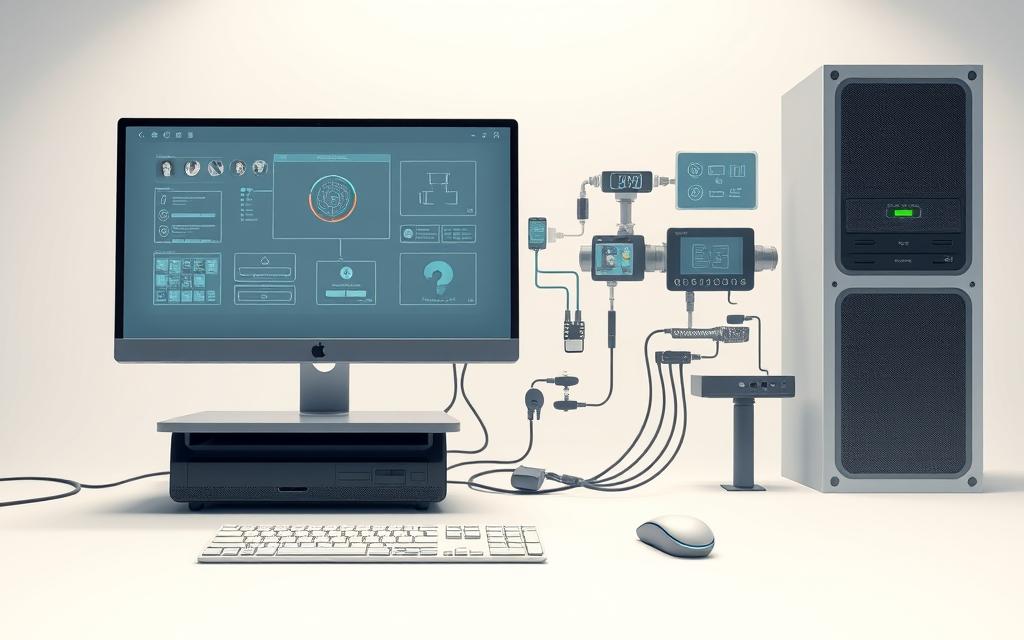
Good HCI systems have three main parts that work together. These components are the base of all digital interactions.
| Component | Description | Interaction Role |
|---|---|---|
| Human Element | Cognitive processes, physical capabilities, and emotional responses | Provides input and receives output from the system |
| Computer System | Hardware capabilities and software functionalities | Processes information and delivers responses |
| Interaction Techniques | Input methods, feedback mechanisms, and interface designs | Mediates communication between human and computer |
These parts affect each other as they work. Knowing how they interact helps designers make better systems.
Historical Evolution of HCI in Computing
The journey of human-computer interaction is a remarkable story. It has changed from complex technical interfaces to easy systems used by billions every day. This change has made digital technology available to people all over the world.
Early Interfaces: From Command-Line to Graphical
At first, computers needed users to remember long command-line instructions. These systems were only for experts, making computers hard to use. Mistakes were common, and fixing them was often difficult.
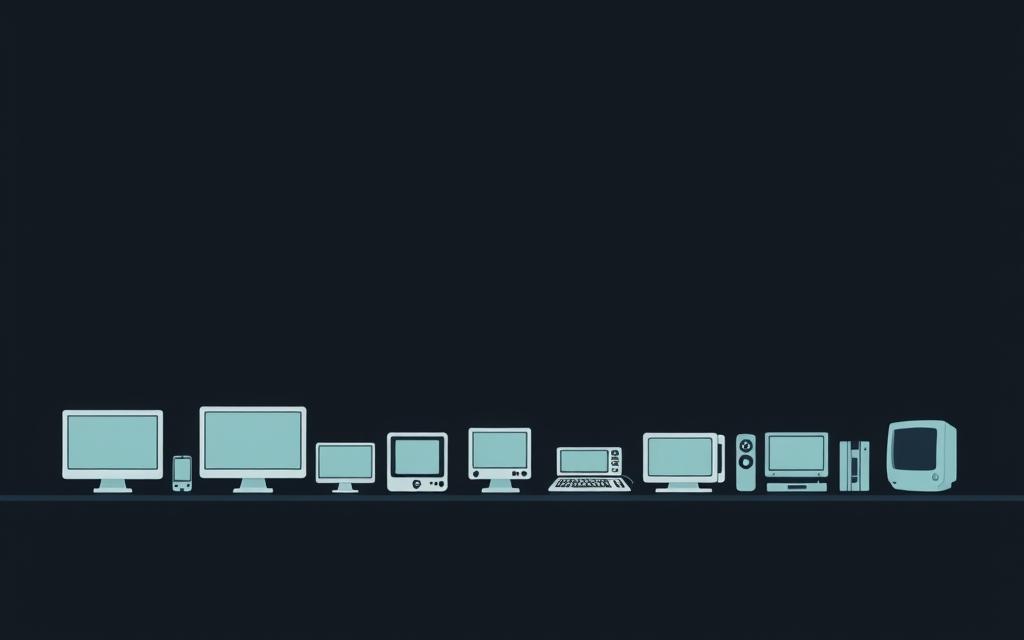
Scientists started using pictures to make computers easier to use. The 1970s saw the first ideas of windows, icons, and pointing devices at Xerox PARC. These ideas were the start of the graphical user interface revolution.
The GUI Revolution and Its Transformative Impact
The 1984 Macintosh by Apple brought graphical interfaces to everyone. It replaced typing with pictures and direct actions. This change made computers easy for anyone to use.
- Visual desktop metaphors mimicking physical office environments
- Point-and-click interactions using mice instead of keyboards
- Consistent menu systems across applications
- WYSIWYG (What You See Is What You Get) document editing
This was a big change in HCI history. Computers went from business tools to personal devices. Microsoft Windows made these ideas even more popular in the 1990s.
Modern Touch and Gesture-Based Interfaces
The 21st century brought new ways to interact with computers through touch interfaces. Apple’s iPhone showed how easy it could be to use fingers to control devices. Swiping and zooming felt natural from the start.
Now, computers understand gestures, voice commands, and even eye tracking. This makes computers more like invisible helpers. The shift from typing to gestures has made technology more accessible to everyone.
Today, touch interfaces keep getting better with haptic feedback and pressure-sensitive displays. These features add a new level of interaction, making computers more human-friendly.
Fundamental Principles of Effective HCI Design
Good human-computer interaction starts with key design rules. These rules put the user’s needs first, making systems easy to use. This way, users can use the system with ease and speed.
Usability as the Primary Design Objective
Usability is at the heart of HCI design. It shows how well users can do what they need in a system. Designers aim to make interfaces that feel natural, not hard to use.
Important usability aspects include how easy it is to learn, how fast users can do tasks, and how few mistakes are made. Systems should be simple to understand right away. Tasks should be quick once users get the hang of it. And, good design stops errors before they start.
Ben Shneiderman’s eight golden rules of interface design offer great advice for making things user-friendly. These rules focus on being consistent, giving clear feedback, and handling errors well. They help make systems that are quick to respond and reliable.
Accessibility and Inclusivity Considerations
Effective HCI design meets the needs of all users. Accessibility ensures people with disabilities can use digital products easily. Inclusivity goes further, making sure systems work for everyone, regardless of age, culture, or experience.
Following guidelines like the Web Content Accessibility Guidelines (WCAG) is key to good accessibility design. These rules help make interfaces work with tools like screen readers. Designers pay close attention to colour contrast, text size, and how well things work with keyboards.
Inclusive design thinks about all kinds of human diversity. It aims to create solutions that work for people with temporary or situational challenges. This approach helps everyone, not just those with permanent disabilities.
Consistency Across Digital Environments
Consistency makes systems predictable and easy to use. When interfaces follow the same patterns, users can move smoothly from one part to another. This saves time and builds confidence.
Consistency works on several levels in HCI design. Visual consistency uses the same colours, fonts, and styles everywhere. Functional consistency means similar actions have the same results. And internal consistency keeps things consistent within a single product.
External consistency matches the look and feel of other applications. Users like it when common tasks, like saving files or printing, work the same way everywhere. This makes things easier and less frustrating.
| Design Principle | Key Focus Areas | User Benefits | Implementation Examples |
|---|---|---|---|
| Usability | Learnability, efficiency, memorability | Reduced training time, higher productivity | Intuitive navigation, clear error messages |
| Accessibility | Perceivable, operable, understandable content | Equal access for all abilities | Keyboard navigation, text alternatives |
| Consistency | Visual, functional, external alignment | Predictable interactions, faster learning | Standardised icons, uniform workflows |
Core Components of HCI Systems
Human-Computer Interaction is a complex area where three key elements come together. These elements make digital experiences smooth. They connect what we want to do with what the computer can do.
The Human Element: Cognitive Processes and Capabilities
Understanding human factors in HCI starts with knowing how we process information. Our brains handle memory, attention, perception, and solving problems. These skills guide how interfaces are designed.
Designers must consider our limitations in processing information. For example, how much we can remember at once affects how info is shown. Good interfaces match our natural ways of thinking, not fight them.
Everyone thinks differently. Some like pictures, others text or sounds. This means designs need to be flexible to suit everyone.
Computer Systems and Their Technical Capabilities
The tech side of HCI includes hardware and software that lets us interact. Things like processing power, screens, and how we input data are key.
Today’s tech is getting better fast. Better screens, faster processors, and new sensors mean we can do more. These advances change what’s possible in designing interfaces.
How a system is set up affects how we use it. Fast systems feel natural, but slow ones can get in the way.
Interaction Techniques and Input Modalities
The link between us and computers uses many interaction techniques. These have grown from just keyboards and mice.
Now, we have:
- Touch and gesture controls on phones
- Voice commands and understanding language
- Motion and spatial tracking
- Feeling feedback through touch
Each way has its own strengths for different situations and users. The best systems mix several to be easy and fun to use.
Choosing the right interaction techniques depends on many things. What we need to do, what we like, where we are, and what tech we have all matter.
User-Centred Design Methodologies
Putting users at the centre of design is key to good human-computer interaction. It changes how we make interfaces, focusing on solving problems for people, not just technology.
User-centred design is a big change from focusing on tech to focusing on people. It starts with understanding what users really need before any tech work begins.
Understanding User Needs and Behaviour Patterns
Good design starts with deep user research. Teams use many ways to learn about who they’re designing for.
Some common methods include:
- Contextual interviews to see users in their own settings
- Task analysis to look at how users work now
- Persona development to create detailed user profiles
- Journey mapping to show the whole user experience
This research shows what users really need to do their jobs well, not just what they say they want.
Iterative Design and Rapid Prototyping Approaches
Iterative design in HCI means always improving through many cycles. It knows that perfect interfaces take time and effort.
Rapid prototyping lets teams test ideas fast and cheaply. Some common methods are:
- Paper prototypes for quick idea checks
- Interactive wireframes to test navigation
- High-fidelity mockups for design checks
- Functional prototypes to see if it works
Each step builds on what’s learned before, making the interface better with each try.
Evaluation and Continuous Feedback Incorporation
Regular checks make sure designs meet user needs as they grow. Both formal and informal tests help improve the design.
Good user feedback comes from many sources:
- Usability testing with real users
- A/B testing to compare designs
- Analytics to see how it’s used
- Feedback channels for ongoing input
This cycle of testing and improving makes each design better for users.
The best designs keep collecting user feedback even after they’re live. This lets them keep up with changing user needs and tech.
HCI Evaluation Techniques and Performance Metrics
HCI experts use detailed methods to check how well interfaces work. These HCI evaluation techniques are key to making digital products better. They help ensure products meet user needs well.

Comprehensive Usability Testing Methodologies
Usability testing is at the heart of HCI checks. It looks at how real users use interfaces in a controlled way. Researchers use many usability testing methods, like lab studies and field observations.
These methods find out where users struggle. They see how well users understand and use the interface. Tests can be done with or without a moderator.
Think-aloud tests are a key part. Users talk out loud while they use the interface. This shows designers and developers what users are really thinking.
Objective Performance Measurement Criteria
Quantitative performance metrics give clear data on how well interfaces work. They look at things like how fast users complete tasks and how many mistakes they make.
Some key criteria are:
- How well users achieve their main goals
- How long it takes to do standard tasks
- How many mistakes users make
- How easy it is for new users to learn
These numbers help compare different versions of interfaces or products. They guide design choices and show where to improve.
Subjective User Satisfaction Assessment
Objective metrics show what users can do. But subjective assessments look at how users feel. They use questionnaires and rating scales to measure satisfaction.
Tools like the System Usability Scale (SUS) are used. They ask about ease, efficiency, and overall satisfaction. Comprehensive HCI evaluation frameworks also include these metrics.
Qualitative feedback adds more detail. It comes from interviews and open-ended surveys. This mix of numbers and words gives a full view of user experience.
Good HCI evaluation uses all three: usability testing, metrics, and satisfaction. This way, it gives a full picture for improving interfaces.
HCI in Diverse Computing Environments
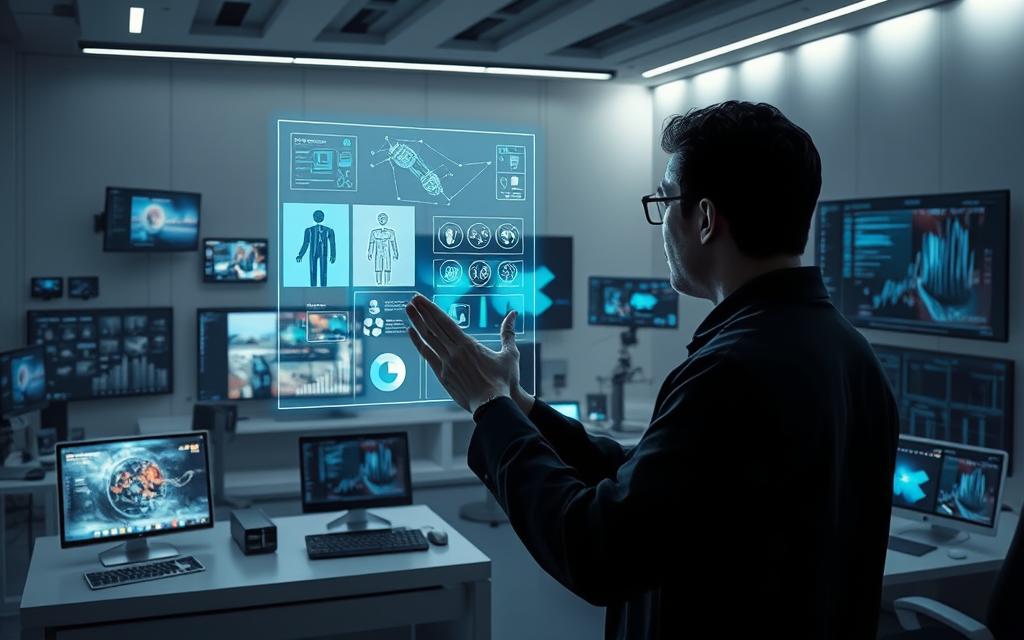
Human-computer interaction changes a lot across different tech platforms. Each one has its own design challenges and chances. We need to make HCI work well on all kinds of screens, inputs, and situations while keeping it easy to use.
Desktop and Workstation Interaction Paradigms
Desktops are big in work places because they’re powerful and have lots of screen space. They use keyboards, mice, and fancy graphics.
When designing for desktops, we think about:
- Managing many windows and tasks smoothly
- Being precise with the mouse for detailed work
- Customising menus and toolbars
- Using several apps at once
Desktops can handle complex designs because they’re not moved around. Users spend a lot of time working, needing to use many apps.
Mobile and Handheld Device Interface Considerations
Mobile HCI faces special challenges like being small, touch-only, and always on the move. Designers aim for simple, quick access, fitting to changing situations.
Important mobile design points are:
- Designing for thumbs, with easy-to-hit targets
- Features that change based on where you are and what you’re doing
- Keeping the battery life up with efficient design
- Being easy to use with one hand, for when you’re on the go
Good mobile designs use simple gestures and reveal more features as needed. They must meet user needs quickly, without needing to learn too much.
Embedded Systems and IoT Interaction Challenges
The Internet of Things (IoT) brings new HCI challenges. These include small or no screens, limited power, and special functions.
IoT interaction issues are:
- Dealing with no screens, needing other ways to get feedback
- Being used in short, interrupted ways, not all the time
- Making sure devices work together across different systems
- Keeping user data safe in always-connected devices
IoT devices often use subtle changes in light, sound, or vibration to share info. This makes things easier to understand without screens.
Designing for all kinds of devices means knowing each one’s special needs and chances. Good HCI adapts basic ideas to fit each place, keeping things consistent when it matters.
Emerging Interaction Paradigms and Technologies
The world of human-computer interaction is changing fast. New emerging HCI technologies are making digital systems easier to use. They offer more natural ways to interact, closing the gap between what we want and what machines do.
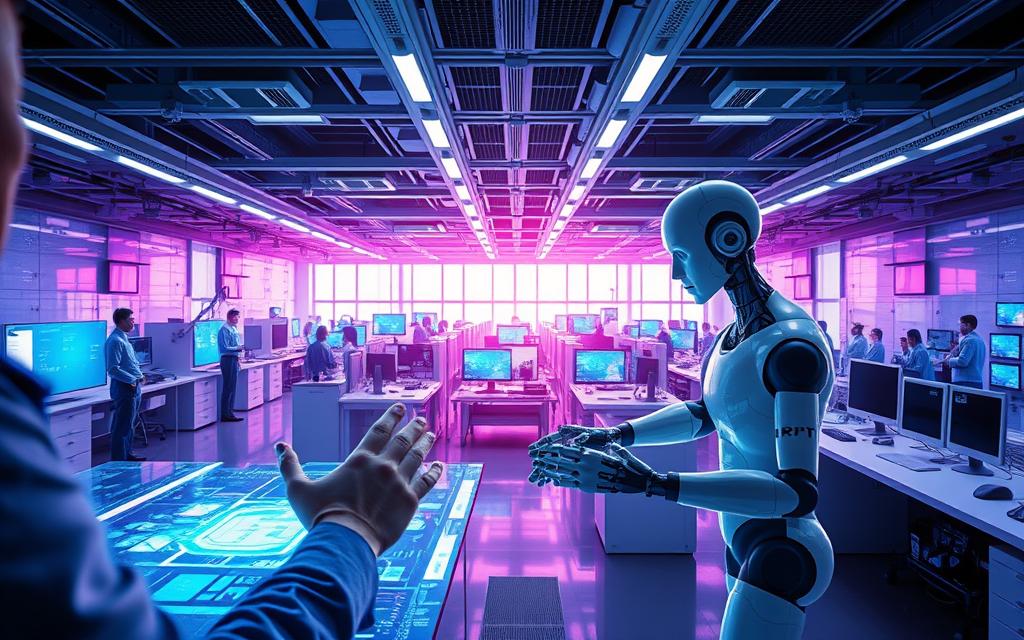
Voice and Natural Language Interface Systems
Voice-activated systems are a big leap forward in interaction design. Voice interfaces let us talk to devices naturally, not just type commands.
Virtual assistants like Siri, Alexa, and Google Assistant show how far natural language processing has come. They get our context, learn our likes, and give smart answers. This tech lets us use devices without our hands, in places like homes and cars.
Creating these systems needs advanced algorithms that understand speech, accents, and slang. This makes computers more accessible to everyone, no matter their skills or abilities.
Gesture and Motion-Based Control Mechanisms
Gesture recognition lets us control devices with our bodies. This way, we don’t need to touch screens, making interactions cleaner and more flexible.
Microsoft’s Kinect was a pioneer in gaming, and now smart TVs and phones can be controlled by hand gestures. Cameras and sensors track our movements, turning them into digital commands.
This tech is getting better at understanding our gestures, making it useful for more than just games.
Augmented and Virtual Reality Interface Designs
Augmented and virtual reality systems bring digital worlds to life. They mix the real and virtual, changing how we interact with screens. This shift moves us from two-dimensional to three-dimensional spaces.
Augmented reality adds digital info to our world through phones or smart glasses. Virtual reality creates full digital worlds with headsets. Both need new ways to interact that feel natural in three-dimensional space.
These systems use controllers, eye tracking, and spatial awareness for intuitive controls. Designing them considers how we see and move in space to avoid confusion and ensure comfort.
The growth of these emerging HCI technologies will make digital interactions smoother and more natural. As they improve, they will change how we interact with computers forever.
HCI’s Impact on Software Development Practices
Human-Computer Interaction has changed how we make software. It puts the user at the heart of the process. This leads to software that is easy to use and works well.
Interface Design Integration in Development Lifecycles
Now, interface design is part of the start, not just the end. This way, developers can make experiences that work well and are easy to use at the same time.
Agile and DevOps methods use HCI by getting feedback from users often. They test usability and function together, making sure the software meets both needs.
Cross-Platform Compatibility and Consistency Challenges
Creating software for many platforms is hard. Designers must keep things consistent but also adapt to each device and user’s needs.
Responsive design helps, but it’s not easy. The same action should work the same way on all devices.
Progressive web apps and adaptive interfaces help keep things consistent across platforms. They also keep the unique features of each platform.
Seamless Integration with Backend IT Systems
Good backend integration makes sure interfaces work well with data systems. It keeps things fast and gives users quick feedback.
Modern API design and microservices help with this. They let the front and back ends grow separately but stay connected. This makes complex interfaces possible without losing stability or speed.
When HCI is done right, software feels natural but can handle tough tasks. This is the goal of modern development: combining technical skill with great user experience.
Accessibility and Universal Design Principles
In today’s digital world, making interfaces for everyone is key. It’s not just good practice; it’s a must for developers and designers. True digital inclusion means thinking about all human abilities from the start.
Designing for Diverse User Capabilities and Needs
Good human-computer interaction knows users have different abilities. Some might see things differently, while others might move or think differently. The aim of universal design is to make solutions for the widest range of people without extra help.
Think about colour contrast for those with colour blindness. Text size options help those who see things differently. Clear navigation is good for those with cognitive challenges. These are key parts of accessibility in HCI that help all users.
Assistive Technologies and Adaptive Interface Solutions
Assistive technologies help match user abilities with what interfaces need. Screen readers turn text into speech for those who can’t see well. Voice recognition lets people use computers without their hands. Different input devices help people with physical challenges.
Today’s systems often change to meet user needs. They might adjust text size or contrast, offer keyboard options instead of mouse, or make things simpler for those with cognitive challenges. They also use different ways to show information, like sound or touch.
The table below shows common assistive technologies and what they help with:
| Technology Type | Primary Function | Key User Benefits | Compatibility Considerations |
|---|---|---|---|
| Screen Readers | Text-to-speech conversion | Access for visual impairments | HTML semantic structure requirements |
| Voice Control Systems | Speech-to-command processing | Hands-free operation | Microphone quality and noise cancellation |
| Alternative Input Devices | Specialised controllers | Motor impairment accommodation | Driver support and customisation options |
| Screen Magnifiers | Visual enlargement | Partial sight assistance | Resolution and responsive design support |
Regulatory Compliance and Standards Adherence
Many countries have laws about digital accessibility. The Americans with Disabilities Act is one example in the United States. Following these laws is important, not just to avoid trouble, but to reach more people.
International standards give clear rules for making things accessible. The Web Content Accessibility Guidelines (WCAG) offer detailed advice for making digital content accessible. Following these standards helps make sure your universal design meets high standards of inclusivity.
Companies should test for accessibility during development. Regular checks find and fix problems before products are released. This approach to accessibility in HCI makes better experiences for everyone and keeps things legal.
Future Trends and Developments in Human-Computer Interaction
The world of human-computer interaction is changing fast. New technologies are changing how we use digital systems. These changes will make our interactions with technology smoother and more natural.
Artificial Intelligence Integration in HCI Systems
Artificial intelligence is making HCI systems smarter. They now adapt to how we behave and what we like. This is thanks to machine learning algorithms that study our patterns.
AI in HCI is bringing many benefits:
- Predictive interfaces that guess what we need
- Natural language processing for better chats
- Adaptive interfaces that change with the situation
- Emotion recognition systems that understand how we feel
These smart systems get better with time. They learn from us, making interactions feel natural and easy.
Brain-Computer Interface Research and Developments
Brain-computer interfaces are a big deal in HCI research. They let us talk to computers with our minds, without using our hands.
Researchers are working on:
- Non-invasive EEG technology for mind reading
- Neural signal processing algorithms
- Systems that give feedback in real time
- Medical uses for people with paralysis or communication issues
These technologies could change how we use computers every day. They offer a chance for hands-free interaction.
Ethical Considerations in Advanced HCI Implementations
As HCI tech gets more advanced, we need to think about ethics. The use of AI and neural interfaces raises big questions about privacy, consent, and security.
Important ethical issues include:
- Keeping data safe in adaptive systems
- Dealing with bias in AI-driven interfaces
- Getting consent for neural data
- Ensuring everyone can access these technologies
Developers must tackle these issues head-on. They need to create clear ethical guidelines. This will help keep users’ trust and safety.
The future of human-computer interaction is exciting. It’s pushing boundaries and opening up new possibilities. But, we must carefully consider the implications. These trends will shape our interactions with technology for years to come.
Conclusion
Human-Computer Interaction is key to making technology easy for us to use. It shows how good interfaces turn complex systems into simple tools. This is vital in our digital world.
From old command lines to today’s touch screens, HCI has grown a lot. It focuses on making things easy to use, accessible, and consistent. This makes digital experiences better for everyone.
The future of HCI looks exciting. New tech like voice control, gestures, and AI will make interactions even smoother. These changes will shape how we interact with computers.
HCI is vital for making tech that helps us, not hinders us. Its growth means digital systems will get better, more inclusive, and more effective.
FAQ
What is Human-Computer Interaction (HCI) in information technology?
HCI is a field that mixes computer science, psychology, and design. It aims to make computing systems easy and fun for people to use. This field focuses on creating interfaces that are both useful and enjoyable.
Why is HCI important in modern IT systems?
HCI is key because it makes IT systems not just work but also be easy to use. It boosts productivity and cuts down on mistakes. This is why technology works well for everyone, making it a success in many areas.
How has HCI evolved over time?
HCI has grown from simple command-line interfaces to today’s touch and voice controls. This change has made computers easier to use, changing how we interact with technology.
What are the fundamental principles of effective HCI design?
Good HCI design focuses on usability, making systems easy to use. It also considers accessibility for all users, including those with disabilities. Consistency is another key point, making systems familiar and efficient.
What components make up an HCI system?
An HCI system has three main parts: the human, the computer, and how they interact. This includes visual, audio, and sensor inputs. These parts work together to create a great user experience.
What is user-centred design in HCI?
User-centred design puts users first, understanding their needs and improving systems based on feedback. It makes sure interfaces meet user expectations and gets better over time.
How is HCI evaluated for effectiveness?
HCI is checked through usability tests. These look at how well systems work and how users feel about them. This helps find ways to make systems better.
In what computing environments is HCI applied?
HCI is used in many places, like desktops, mobile devices, and even in smart homes. It makes sure systems work well in different settings.
What are some emerging interaction paradigms in HCI?
New ways to interact include voice commands, gestures, and virtual reality. These technologies make interactions more natural and immersive.
How does HCI influence software development practices?
HCI makes sure software is designed with users in mind. It tackles issues like making systems work the same on different devices. This ensures software is both useful and easy to use.
Why is accessibility important in HCI design?
Accessibility makes technology available to everyone, regardless of ability. It involves using assistive technologies and following rules to ensure systems are inclusive.
What future trends are shaping HCI?
Future HCI will include AI for smarter systems, brain-computer interfaces, and more focus on ethics. These changes aim to make interactions more intelligent and fair.
How does HCI address ethical considerations in advanced implementations?
HCI focuses on privacy, security, and fairness in AI systems. It designs interfaces that are clear and fair, protecting users’ data and avoiding bias.
 Marcin Wieclaw