
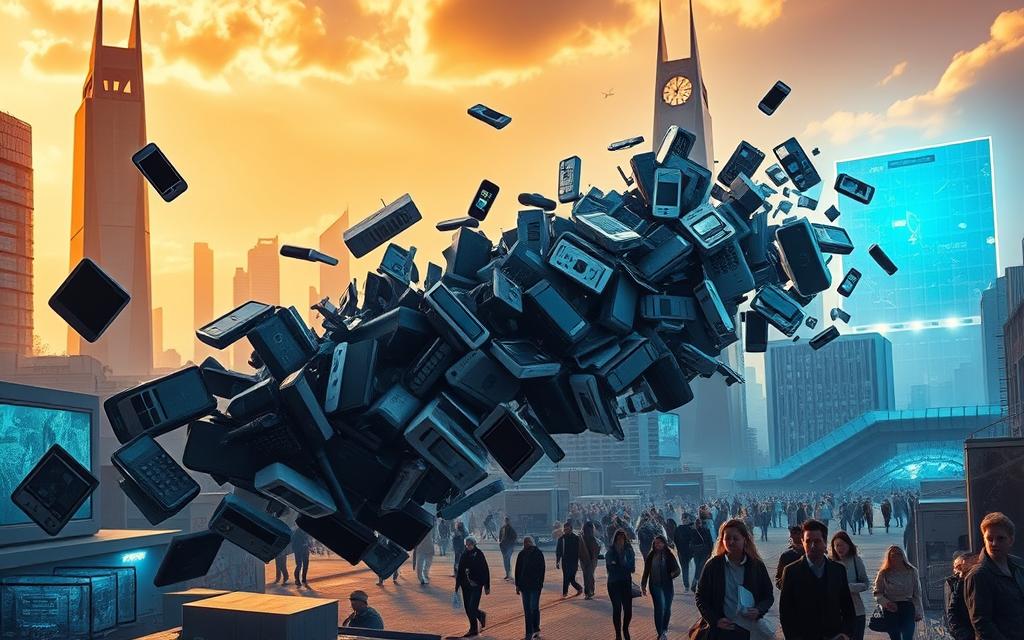
Every new technology breakthrough sends waves through industries. As new tech comes along, old systems lose their edge. This ongoing change deeply shapes our world today.
The market sees this pattern of replacement all the time. Yesterday’s top tech often becomes yesterday’s news tomorrow. This isn’t a fluke but a key part of how tech evolves.
Businesses and users must keep up with these changes. Knowing this cycle helps us prepare and adapt better. The pace of progress is relentless.
This piece looks into why some tech thrives while others fade. We’ll dive into how innovation brings both chances and hurdles in different fields.
Defining Technological Innovation and Obsolescence
To grasp how new tech and old tech value change, we need to understand innovation and obsolescence well.
What Constitutes Technological Innovation
Technological innovation is when new ideas are put into action, making things better. It’s not just about inventing something new. It’s about making a real difference in the market or creating something entirely new.
Key Characteristics and Drivers
True innovation has a few key traits. It’s novel, improves on what’s already out there, and has a big market impact. This impact can change how people use things or set new standards.
What drives innovation? A few main things include:
Related Posts:
- What Is HCI in Information Technology Human-Computer…

- The Advantages of Modern Technology Efficiency and…

- How Technology Is Helpful for Students Enhancing…

- What Is Remote Technology Tools for Telework and…

- What Is DOCSIS 3.1 Technology Faster Cable Internet Speeds

- What Is IFP in Technology Interactive Flat Panels in…

- Deep research and development
- Strong competition
- Changing what people want and need
- New rules and regulations
- Big scientific breakthroughs
Understanding Obsolescence in a Technological Context
When tech gets better, old products or systems lose value. This is what we call obsolescence. It’s when something becomes less useful or valuable because of new tech.
Technological obsolescence is when something loses value because of new tech.
This happens throughout a product’s life. As new tech comes out faster, old stuff gets outdated quicker. Knowing about obsolescence helps everyone make better choices about tech.
Types of Obsolescence: Functional, Technical, and Perceived
There are three main types of obsolescence. Each has its own reasons and effects:
Functional obsolescence is when a product can’t do its job anymore. This could be because it’s broken or doesn’t work with new systems.
Technical obsolescence is when new tech is better and cheaper. Old tech is not as good, so it’s not worth keeping.
Perceived obsolescence is when people don’t want something anymore, even if it works. This is because of changing styles, features, or what’s popular.
Each type affects products in different ways. It shows how new tech can make old tech seem less valuable.
Historical Perspectives on Technological Obsolescence
Throughout history, new technologies have made old ones seem outdated. This pattern has shaped industries and changed societies. It shows how the cycle of innovation has worked over time.
The Industrial Revolution: Early Examples of Obsolescence
The Industrial Revolution was a key moment in this cycle. It brought in machines that changed how things were made. This led to the first big examples of old technologies becoming useless.
Textile Machinery and Steam Engine Replacements
Handlooms were replaced by power looms and spinning jennies in the textile industry. These new tools made more clothes faster and needed less people to work them.
The steam engine is another example. Early engines were soon bettered by James Watt’s design. Later, steam was replaced by electric power.
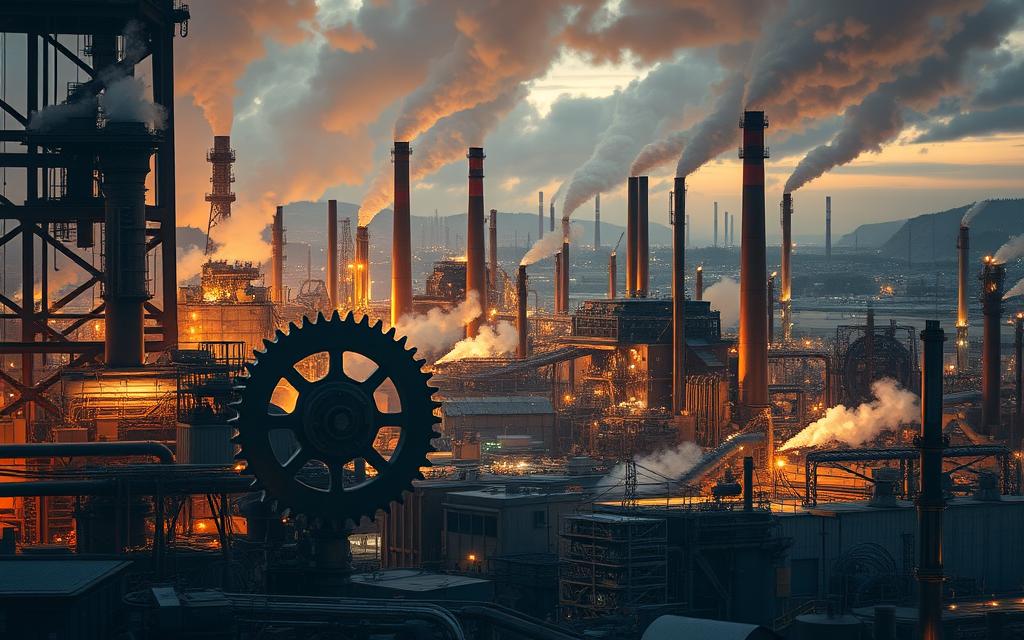
Many technologies followed this pattern. The telegraph was a big step forward but was soon outdated by phones and digital tech.
20th Century Innovations and Their Impacts
The 20th century saw technology change fast. Many new technologies came and went in just a few years.
The Automobile Industry and Model Changes
Henry Ford made cars affordable with his assembly line. But, he also made them seem old with new models every year. This made people want the latest car.
This cycle of new features every year kept the car industry going. It made people want to buy new cars all the time.
Fax machines were once key for business but are now almost gone. They were replaced by email and digital files.
These examples show how innovation has worked for centuries. Each new technology brings new chances but also makes old ones seem old.
How Can Technological Innovation Lead to Obsolescence
Technological progress often leads to obsolescence. This happens in two main ways. First, new technologies come out fast, making old ones outdated. Second, the market rewards new ideas but penalises those who don’t keep up.
The Role of Rapid Development Cycles
Innovation cycles have sped up a lot in tech. Products used to get updates every few years. Now, they often need new versions every few months. This fast pace forces businesses and users to keep up.
Shortening Product Lifecycles in Electronics
Electronics show the biggest drop in lifespan. Smartphones that were top-notch eighteen months ago can’t handle today’s software. New models come out before the old ones are fully used.
Devices become outdated before they break. Every two years, computers get twice as powerful. This means older devices can’t run new software well.
Market Forces Driving Obsolescence
Competitive markets push for new tech. Companies that don’t innovate get left behind. This is like a tech version of natural selection.
Like natural selection, only the fittest tech survives in a competitive environment.
Consumer Demand and Competitive Pressure
Today’s buyers want the latest tech. They want devices that are faster and have more features. This makes companies focus on new products over keeping old ones going.
When one company brings out a disruptive technology, others must keep up. They need to match or beat the new tech to stay in the game. This cycle makes old tech obsolete.
So, the tech world is always changing. Products that can’t keep up are replaced by newer ones.
Planned Obsolescence: Strategy or Necessity?
Many technological advancements are linked to a controversial strategy: making products fail on purpose. This is called planned obsolescence. It means products are made to need to be bought again and again, not to last long. Companies use different ways to make sure people keep buying.
Intentional Design for Short Lifespans
Manufacturers make products that don’t last long on purpose. They use bad materials and make repairs hard. The goal is to make products that need to be replaced often.
Some devices have batteries that get weaker over time. Others have special screws that stop people from fixing them. These tricks make products break down on their own, not because they’re old.
Examples from the Light Bulb and Printer Industries
The light bulb industry shows how planned obsolescence works. In the 1920s, a group called the Phoebus cartel made bulbs last less than half as long. This made people buy more bulbs, even if they didn’t need to.
Today, printer companies use tricks like special ink cartridges and updates that stop printers from working. Some printers won’t use ink from other companies, even if it’s the same quality.
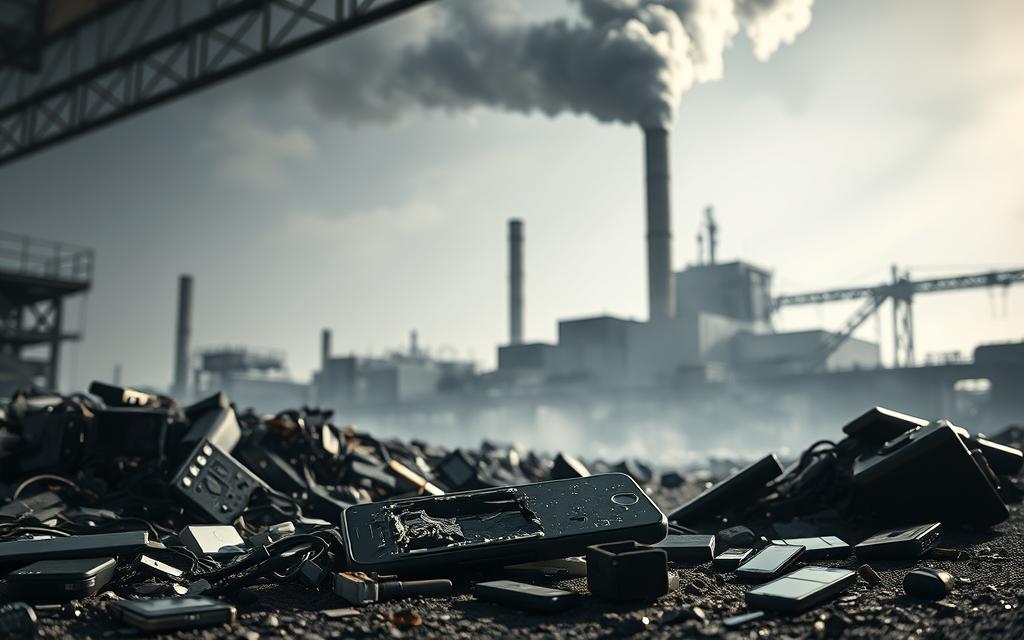
These examples show how companies make products break down on purpose. They do this to make more money, even though people are starting to notice.
Ethical Considerations in Innovation
Planned obsolescence raises big questions about how companies should act. Critics say it goes against the idea of sustainable development. It harms the environment and breaks trust with customers.
Others say it’s needed for progress. They think it helps the economy by keeping innovation going. They see it as a way to keep making new things.
Balancing Progress with Sustainability
There’s a big debate about how to balance new ideas with taking care of the planet. Companies need to think about making money now versus the harm they might cause later. Customers want products that last, not ones that need to be thrown away.
Some companies are starting to make products that can be fixed and upgraded. This way, they can keep making new things without wasting resources. It’s a step towards making technology better for everyone.
Laws are being made to stop companies from making products that break down too fast. France has already banned planned obsolescence. Other countries might follow. The goal is to make products that last longer.
The argument between making money and doing the right thing is ongoing. Finding a balance is key to making technology better for the future.
Case Study: The Evolution of Personal Computing
Do you remember your first favourite gadget? Maybe it was a Flip camera, Pebble smartwatch, or original iPod. These items were once essential, but now they’re often forgotten or thrown away. The world of personal computing is full of examples of how new tech makes old tech seem outdated.
From Mainframes to Smartphones
Computing started with huge mainframes only big companies and universities could use. The 1980s brought personal computers to homes and offices. This change opened up new markets and made old tech seem old-fashioned.
Laptops arrived in the 2000s, making desktops less needed. Then, smartphones came along, combining mainframe power with tiny size. Each new step made the old tech less important for everyday use.
The Rise and Fall of Desktop Computers
Desktop computers were key for 20 years, becoming a must-have for many. Their decline was slow but sure, pushed by more portable options. Now, desktops are mainly for specific jobs, not everyday tasks.
At first, makers didn’t want to change, but the market forced them to. Those who updated their products did well, while those who didn’t struggled.
Obsolescence in Software and Hardware
Obsolescence shows up in different ways in software and hardware. Hardware gets old and outdated, while software stops working with new systems. Both lead to needing to buy new things, but in different ways.
Users often need to upgrade because things don’t work as well as they used to. This need for better performance leads to buying new things before they’re really needed.
Microsoft Windows Updates and iPhone Model Cycles
Microsoft’s Windows updates are a clear example of planned obsolescence. New versions often need new hardware, forcing users to choose between old software or new hardware.
Apple’s iPhone updates show how hardware becomes outdated. New iPhones have features older ones don’t, making users want to upgrade. Older phones get less support, making them less useful over time.
| Era | Dominant Technology | Obsolescence Driver | Typical Lifespan |
|---|---|---|---|
| 1980s-1990s | Desktop Computers | Hardware Performance | 7-10 years |
| 2000s-2010s | Laptops | Portability Needs | 5-7 years |
| 2010s-Present | Smartphones | Software Compatibility | 2-3 years |
The world of personal computing shows how new tech makes old tech seem old. These examples show how progress and strategy decide what stays and what goes.
The Impact on Consumer Behaviour
Technology changes don’t just update products; they change how we use them. The fast pace of new tech creates a world where some people quickly adopt new things. Others resist, showing how our relationship with tech is always changing.

Adoption of New Technologies
People often take to new tech quickly. This is because of many reasons like wanting to be seen as modern or to keep up with friends. These reasons make us want to get the latest gadgets.
Psychological Factors in Upgrading Devices
There are many reasons why we choose to upgrade our devices. Feeling left out if we don’t have the newest tech is one. Also, feeling like our current devices are outdated plays a big part.
Marketing uses these feelings to get us to buy more. Special deals and the latest features make us feel like we need to upgrade. Seeing what others have on social media also makes us want to keep up.
Resistance to Obsolescence
Even though many people quickly adopt new tech, there’s a growing movement against always needing the latest. People are starting to think about the planet and saving money by using devices for longer.
Movements Towards Repair and Longevity
The right-to-repair movement is getting bigger all over the world. People want products they can fix themselves and information on how to do it. This shows a big change in what we expect from our products.
Companies are now being asked to make products that can be fixed. Laws in some places are supporting this, showing how social attitudes and laws can change how long we use our tech.
| Consumer Behaviour Pattern | Primary Drivers | Market Impact | Environmental Consideration |
|---|---|---|---|
| Early Adoption | Status seeking, FOMO, innovation appeal | Higher profit margins for new products | Increased e-waste generation |
| Practical Upgrading | Functionality needs, broken devices | Steady replacement market | Moderate environmental impact |
| Repair and Maintain | Cost savings, environmental values | Growing aftermarket services | Reduced waste, resource conservation |
| Complete Resistance | Minimalist values, anti-consumerism | Niche market influence | Minimal environmental footprint |
This changing world of consumer behaviour shows that tech companies have to think about more than just making new things. They need to understand these changes to make products that are good for both the market and the planet.
Economic Implications of Technological Obsolescence
Technological progress has big effects on the economy. It changes markets, jobs, and how businesses work. Knowing these effects helps us understand how technology moves forward.
Studies show that obsolescence can hurt companies’ productivity. This decline affects their growth and survival.

Effects on Industries and Employment
Technology’s constant change makes some industries win and others lose. Those that can’t keep up see their market share and profits drop. This change impacts not just companies but also the workers in these sectors.
Job Displacement in Traditional Sectors
Older manufacturing and service sectors face big challenges. Automation and digital tech make many jobs obsolete. Workers must choose to retrain or find new jobs in fields that are disappearing.
This change puts a strain on communities and regions. Places that rely on outdated tech often see more unemployment. It’s a problem that needs help from both businesses and governments.
Cost-Benefit Analysis for Businesses
Companies have to weigh their financial choices when technology changes. They must decide whether to adopt new tech or stick with what they have. This choice affects their spending on research and operations.
Investment in Innovation versus Maintenance
Businesses must choose how to spend their money. They can invest in new tech or keep their old systems running. This decision needs careful planning and risk assessment.
| Industry Sector | Innovation Investment (%) | Maintenance Allocation (%) | Productivity Impact |
|---|---|---|---|
| Technology Hardware | 65-75% | 25-35% | High positive correlation |
| Financial Services | 45-55% | 45-55% | Moderate positive correlation |
| Traditional Manufacturing | 25-35% | 65-75% | Negative correlation |
| Healthcare Technology | 55-65% | 35-45% | Strong positive correlation |
The way companies spend their money affects their success. Those who focus too much on keeping old systems afloat struggle. But those who invest in new tech without thinking about their current setup risk problems.
The effects of obsolescence are not just felt by companies. They also impact the whole supply chain and partners. Making smart investment choices has big effects on the business world. It’s important to think about the whole picture when dealing with obsolescence.
Environmental Consequences of Rapid Obsolescence
Technology advances fast, causing big environmental problems. Devices become outdated quickly, leading to waste management issues. This affects our efforts to achieve sustainable development goals.
E-Waste and Sustainability Challenges
Electronic waste grows fast, posing big risks to the environment and health. If not disposed of properly, it can pollute soil and water. This causes long-term damage to our ecosystems.
Global E-Waste Statistics and Trends
Recent data shows the e-waste crisis is huge. The Global E-waste Monitor says we made about 53.6 million metric tonnes of e-waste in 2019. This number is growing by nearly 2 million metric tonnes every year.
Only 17.4% of this e-waste was recycled safely. The rest often goes to landfills or unsafe recycling places. This puts workers and communities at risk.
| Region | E-Waste Generated (million tonnes) | Formal Recycling Rate | Projected Growth (2020-2030) |
|---|---|---|---|
| Asia | 24.9 | 11.7% | +39% |
| Americas | 13.1 | 9.4% | +25% |
| Europe | 12.0 | 42.5% | +18% |
| Africa | 2.9 | 0.9% | +31% |
Innovations in Recycling and Reuse
The tech industry is moving towards a circular economy. This means using resources more efficiently and reducing waste. It’s good for the planet and for business.
Sustainability Directory is driven by three core principles: Aspire, Adapt, and Amplify.
These principles guide how companies tackle environmental issues. First, they aim for higher sustainability standards. Then, they adapt their operations. Lastly, they lead by example to make a bigger difference.
Initiatives by Companies like Apple and Dell
Big tech companies are taking steps to reduce their environmental impact. Apple’s Daisy robot can take apart 200 iPhones an hour, recovering valuable materials. Apple aims to be carbon neutral by 2030.
Dell Technologies has a big plan for a circular economy. They use recycled plastics in their products. Their recycling system has kept millions of kilograms of e-waste out of landfills.
These efforts show how tech can solve its own environmental problems. By designing responsibly, recycling efficiently, and adopting sustainable practices, the industry can lessen its environmental impact. This way, it can keep driving progress while protecting the planet.
Technological Sectors Most Affected by Obsolescence
Some industries face intense pressure from new technologies. Large enterprises experience more technological obsolescence in electronic technologies than in chemical and mechanical fields. This creates big challenges for businesses in these fast-changing sectors.
Electronics and Digital Devices
The electronics sector is at the heart of rapid change. Products here are updated in months, not years. This fast pace affects consumer electronics makers and their suppliers a lot.
Smartphones are a prime example of planned obsolescence. New models come out every year, making old ones outdated. The average time to replace a smartphone is just 2-3 years.
Laptops also face quick obsolescence, but a bit slower than smartphones. New processors, memory, and software updates make old laptops less useful. Cloud computing and thinner designs speed up this process even more.
Wearables, like smartwatches and fitness trackers, are the newest area of obsolescence. They combine hardware limits with fast-changing health tech. This makes devices outdated in 12-18 months.
Automotive and Manufacturing Technologies
The car industry is changing fast, making old tech obsolete. Cars now have computing power like smartphones. This change affects car design and making.
Shift to Electric Vehicles and Automation
The move to electric cars is a big change for the auto industry. Old engine tech, transmissions, and exhausts are less important. But, battery tech, electric motors, and power systems are more valuable.
Automation adds more pressure. ADAS and self-driving tech need advanced sensors, processors, and software. Old mechanical parts are being replaced by electronic systems that change faster.
Manufacturing plants also face change as robotics and smart factory tech improve. Old production lines for regular cars struggle with electric cars. This means big training needs and investment in the supply chain.
| Technology Sector | Obsolescence Rate | Primary Drivers | Impact Level |
|---|---|---|---|
| Consumer Electronics | Very High (1-3 years) | Software updates, hardware improvements | Extreme |
| Enterprise Software | High (3-5 years) | Security requirements, compatibility issues | Significant |
| Automotive Systems | Medium (5-8 years) | Regulatory changes, technology shifts | Substantial |
| Industrial Manufacturing | Low-Medium (8-12 years) | Process improvements, automation | Moderate |
Knowing about these obsolescence patterns helps businesses get ready for future trends. Companies that understand these changes can plan better for their tech and people.
Future Trends: Predicting the Next Wave of Obsolescence
We’re on the edge of a new tech revolution. It’s key for businesses and consumers to grasp future obsolescence trends. With innovation speeding up, today’s tech might become outdated quicker than ever.
Emerging Technologies like AI and IoT
Artificial Intelligence and the Internet of Things are leading the tech charge. They’re not just small updates but big changes in how we use digital systems.
AI can learn and change, making old systems seem simple. IoT connects devices, making single devices less useful. Together, they create systems where old tech can’t keep up.
Potential Obsolescence in Current Tech Infrastructures
Today’s tech is at risk of becoming outdated. Old systems can’t easily work with new AI and IoT. This leads to faster updates.
Data centres and networks made for old tech might not handle AI’s needs. They might struggle with the high traffic from machines talking to each other.
Strategies for Mitigating Unwanted Obsolescence
There are ways to slow down the pace of tech change. Good mitigation strategies mix new tech with care for the environment.
Companies should check how long their tech will last. This helps plan for updates. Using modular designs means you can upgrade parts, not everything at once.
Policy Interventions and Corporate Responsibility
Government policies are vital for smooth tech changes. Rules can ensure new tech works with old. This makes old tech last longer.
Companies should think about more than just making money. They should have plans for when tech becomes outdated. Being open about how long products will last helps build trust.
Working together, industries can share best practices. This helps everyone keep up with new tech. It shows a smart way to handle innovation.
Training workers for new tech is important. It means people, not just systems, can adapt. This makes innovation more sustainable for everyone.
Conclusion
Technology keeps moving forward, but it also makes things outdated. This cycle changes our world in big ways. The link between new tech and old tech is complex but clear.
Economic growth often relies on this cycle. People buy new things, but they also face the need to replace them. We must think about the environment in this process. Companies like Apple show how fast innovation can create value and waste.
Our future tech needs to be made responsibly. We must find a balance between progress and caring for the planet. Sustainable development means designing products to last longer and making choices that protect the environment.
Real progress means innovating without making things obsolete unnecessarily. We aim for tech that helps people and protects the planet. This way, technology can make our lives better without harming our future.
FAQ
What is the difference between technological innovation and obsolescence?
Technological innovation means creating new or better products, processes, or services. It brings new features or better performance. On the other hand, obsolescence happens when old technologies are replaced by new ones. This can be due to new products working better or because of social changes.
How does planned obsolescence work, and is it ethical?
Planned obsolescence is when products are made to last only a short time. This encourages people to buy new ones. It raises questions about if it’s right to make things that quickly go out of date.
Some say it’s bad because it leads to waste. Others think it helps the economy grow and brings new ideas.
Which industries are most affected by technological obsolescence?
The tech world, like smartphones and wearables, changes fast. This makes old products seem outdated quickly. The car industry also faces big changes, like moving to electric cars.
What are the environmental impacts of rapid technological obsolescence?
Fast obsolescence leads to a lot of electronic waste. This waste is harmful to the environment and health. But, companies like Apple and Dell are working on recycling and making products last longer.
How can consumers resist or adapt to technological obsolescence?
People can fight obsolescence by supporting repair rights and choosing durable products. They can also wait longer to upgrade. But, new tech can be tempting because it’s seen as cool or because it’s better.
What role do emerging technologies like AI and IoT play in future obsolescence?
New tech like AI and IoT will change many things. They might make old systems seem outdated. To deal with this, we need good planning and responsible business practices.
How does technological obsolescence affect businesses economically?
Obsolescence can shake up industries. It might lead to job losses and the need for more research. Companies have to weigh keeping old products or investing in new ones. It’s a balance between making money now and staying competitive later.
Are there historical examples of technological innovation causing obsolescence?
Yes, there are many examples. In the Industrial Revolution, new machines made old ones useless. In the 20th century, car updates and the decline of steam engines show how new tech replaces old.
 Marcin Wieclaw