

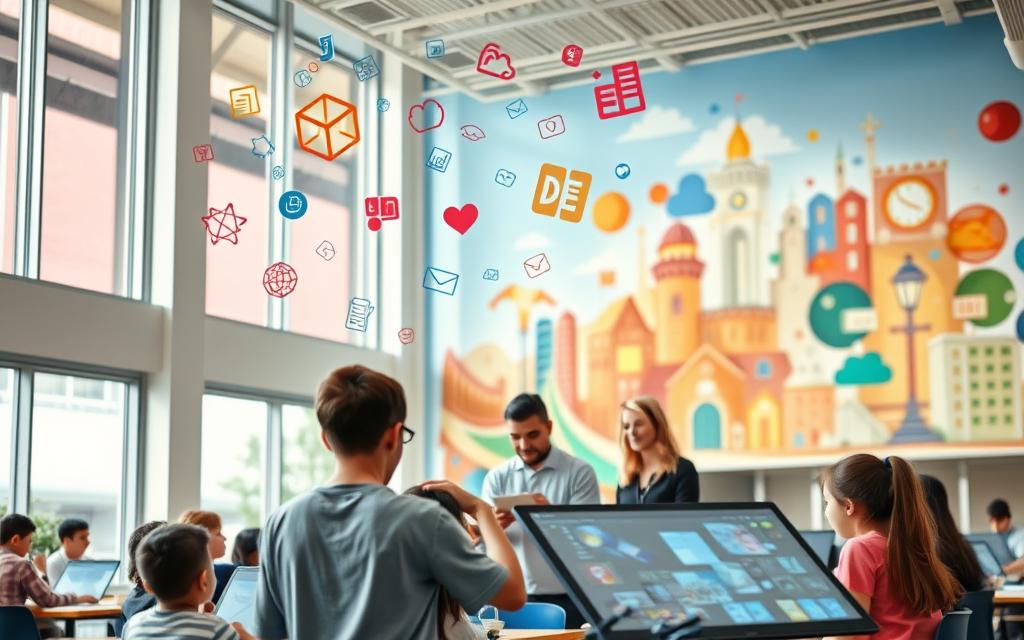
Modern education has changed a lot thanks to digital innovation. Today’s classrooms use powerful tools that change how we learn.
These new tools bring big educational technology benefits. They make learning more fun and effective.
Digital platforms give students quick access to lots of resources. This includes academic journals and interactive simulations. It helps students learn more than just from books.
Teachers see how digital learning advantages help students grow. Students learn to use technology, manage information, and work together. These skills are key for the future.
Technology also breaks down barriers, connecting students worldwide. Virtual tours and expert sessions make learning exciting and real.
This change is more than just new tools. It’s a big shift towards preparing students for tomorrow’s challenges through better learning experiences.
The Digital Transformation of Modern Education
Education has changed a lot, moving from old teaching methods to new digital ways. This change is one of the biggest in US classroom technology in recent years.
Evolution of Educational Technology
The start of edtech evolution was with simple tools. Now, we have advanced digital solutions. This change has made learning more fun and effective.
Related Posts:
- What Is IFP in Technology Interactive Flat Panels in…
- The Advantages of Modern Technology Efficiency and…

- What Is Remote Technology Tools for Telework and…

- Is Syntax Technologies Legit A Review of the…

- What Is HCI in Information Technology Human-Computer…

- What Is DOCSIS 3.1 Technology Faster Cable Internet Speeds

From traditional classrooms to digital learning environments
Classrooms have changed a lot. They used to be dusty places with chalkboards. Now, they are filled with technology.
The chalkboard is mostly gone, replaced by digital whiteboards. These boards make lessons interactive and fun.
Teachers can now use multimedia and the internet in their classes. Students learn in many ways, not just by watching.
Key milestones in educational technology development
There have been key moments in the growth of educational technology:
- Computer labs were introduced in the 1980s, bringing digital access to schools
- The 1990s internet revolution connected classrooms worldwide
- Interactive whiteboards became common in the early 2000s
- Mobile devices, like iPads in education, made learning more accessible
- Cloud-based platforms now help with sharing and collaboration
Current Technology Adoption in US Education
American schools are quickly adopting technology. They invest a lot in new tools and training. This shows they know technology skills are key for the future.
Statistics on technology usage in American schools
Technology is widely used in US schools:
- More than 90% of classrooms have fast internet
- About 70% of K-12 classrooms have interactive displays
- Over 60% of school districts have one-to-one device programmes
- Tablet use, like iPads in education, has grown by 45%
Government initiatives supporting educational technology
Government programmes help schools use technology better. The Every Student Succeeds Act (ESSA) funds tech and digital learning.
The National Education Technology Plan guides schools on using digital tools. States also offer grants for digital whiteboards, devices, and teacher training.
These efforts help schools use technology well. They make sure everyone has access and quality technology.
Enhanced Access to Educational Resources
Technology has changed how students get learning materials. It has broken down old barriers that used to limit learning. Now, we have new ways to access knowledge through digital platforms.
Digital Libraries and Online Databases
Modern education gets a big boost from digital libraries. These digital libraries have huge collections of scholarly materials. They offer more than physical libraries can, thanks to their size and easy access.
Expanding research capabilities beyond physical limitations
Students can now explore topics without being limited by location. They can find rare materials and special publications that were hard to get before.
Twenty-four/seven access to academic journals and publications
Being able to access materials anytime changes how students research. It helps everyone, whether they’re morning people or night owls, to study whenever they need to.
Open Educational Resources
The OER movement is a big step towards making education fair for all. These free educational materials make learning affordable without losing quality.
Reducing textbook costs through digital alternatives
Students save a lot on books each semester. Digital textbooks and open-access publications offer quality content without the cost.
Global knowledge sharing among educational institutions
Teachers around the world work together to make and improve learning materials. This global effort makes learning richer and promotes cultural exchange through online academic resources.
| Resource Type | Key Features | Student Benefits | Institutional Advantages |
|---|---|---|---|
| Digital Libraries | Vast collections, advanced search, remote access | Comprehensive research capabilities | Reduced physical storage needs |
| Online Databases | Peer-reviewed content, citation tools, updated regularly | Current information access | Subscription cost sharing |
| Open Educational Resources | Free access, adaptable content, multiple formats | Zero cost materials | Curriculum flexibility |
The OER benefits go beyond saving money. They offer custom learning experiences. Teachers can tailor materials for their courses, and students get to see different views from around the world.
Personalised Learning Through Adaptive Technologies
Educational technology now offers new ways to tailor learning to each student. No longer is there a one-size-fits-all approach. Adaptive learning technology makes learning experiences dynamic, adjusting to each learner’s pace and understanding.
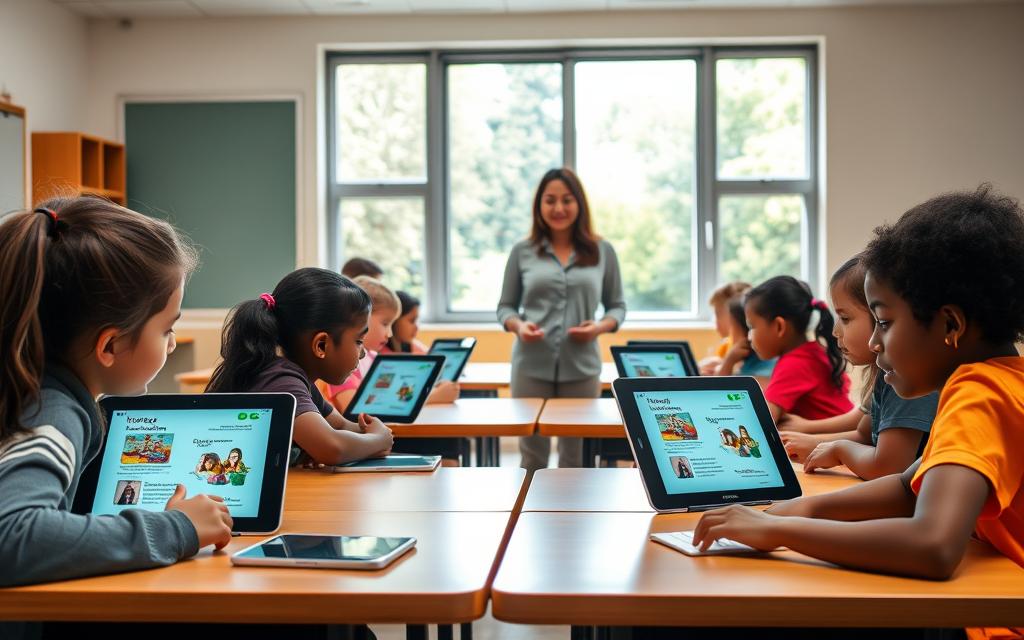
AI-Powered Learning Platforms
The use of AI in education has changed how students interact with learning materials. These smart systems look at student performance patterns to create the best learning experiences.
Customised learning paths based on individual progress
Advanced algorithms track how students interact with content. They adjust the difficulty and style in real-time. This keeps learners engaged, neither too bored nor too challenged.
Real-time assessment and feedback mechanisms
Students get immediate feedback to correct any misunderstandings. The system offers specific guidance, not just generic answers. This makes learning more responsive.
Learning Management Systems
Modern LMS platforms are central hubs for learning. They organise resources, assignments, and communications in one place. This is accessible to both teachers and students.
Tracking student performance and identifying areas for improvement
These systems provide detailed analytics on student achievement. Teachers can quickly see which concepts need extra focus for individual students or whole classes.
Facilitating communication between students and educators
Tools like messaging, forums, and announcements keep the dialogue going. This supports learning outside of class and encourages teamwork.
| Platform | Primary Strength | Adaptive Features | Communication Tools |
|---|---|---|---|
| Blackboard | Comprehensive analytics | Performance-based content delivery | Integrated messaging and forums |
| Moodle | Customisation options | Progress-triggered assessments | Real-time chat and notifications |
| Canvas | User-friendly interface | Personalised learning modules | Video conferencing integration |
These technologies offer a balanced approach to education. They respect individual differences while keeping learning rigorous. The future of education is about finding this balance between structure and flexibility.
Developing Digital Literacy and Technical Skills
Modern technologies are more than just tools for learning. They are essential subjects in their own right. Students need to develop strong digital literacy skills to thrive in our digital world. These skills are key to success in school and future careers.
Essential Digital Competencies for Modern Students
Today’s students must learn many important digital skills. These skills go beyond just using a computer. They include managing information and working together online.
Information literacy and critical evaluation of online sources
Students need to know how to check if online information is true. This means looking at sources, spotting bias, and knowing fact from opinion. Good critical evaluation online skills help avoid false information and improve research.
Digital communication and collaboration tools proficiency
Workplaces now use tools like Microsoft Teams and Google Drive. Students should learn to use these tools for work and school. This prepares them for a world where working together online is common.
Coding and Programming Education
Learning to code is now a must-have skill. It helps students think logically and solve problems. Even a little coding knowledge can be very useful in today’s tech world.
Platforms like Scratch, Code.org and GitHub for skill development
There are many ways for students to learn to code. Scratch is great for kids, while Code.org has courses for different ages. GitHub lets advanced students work together and build portfolios.
Integrating computational thinking across curriculum subjects
Computational thinking is not just for computer science. It’s a way to solve big problems by breaking them down and finding patterns. Teachers can use it in maths, science, and even humanities, making learning more connected.
This approach shows how technology fits into many subjects. It helps students see the real-world uses of digital skills, not just in computer science.
Collaborative Learning in Digital Environments
Digital platforms have changed how students work together. They remove physical barriers and create new learning spaces. These tools help students learn in ways that prepare them for today’s jobs.
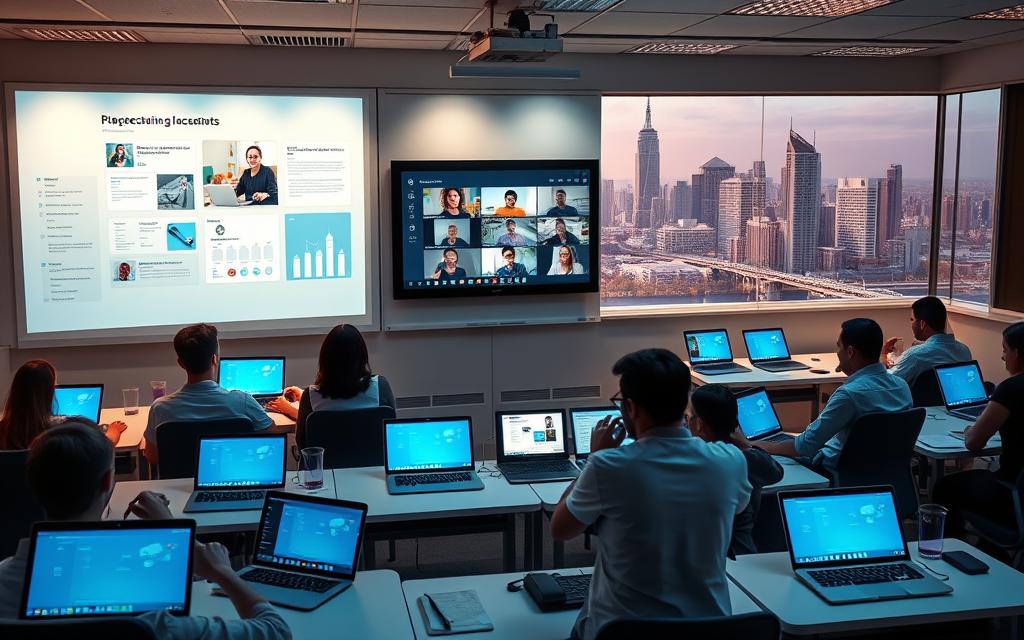
Virtual Classroom Technologies
Today’s education uses advanced virtual classroom tools for easy student and teacher interaction. These tools have turned old classroom settings into exciting digital ones.
Google Classroom and Microsoft Teams for educational collaboration
Google Classroom and Microsoft Teams are key for managing assignments and working together in real-time. They offer tools for sharing documents, giving feedback, and talking, making school work easier.
Video conferencing tools for remote group projects
Tools like Zoom are vital for group work from afar. They let people talk face-to-face, share screens, and use breakout rooms. This makes remote work feel like being in the same room.
“Technology has opened up new chances for students to connect worldwide. It helps them learn together, no matter where they are.”
Global Learning Communities
Digital spaces help create global learning groups that know no borders. Students can join global learning projects that broaden their views and teamwork skills.
Connecting students across geographical boundaries
Technology breaks down distance, letting students from all over work on projects together. This builds international friendships and professional networks that start in school.
Cross-cultural exchange and international project collaboration
Through cross-cultural education, students learn from classrooms in other countries. These experiences help them understand different cultures and prepare them for a global world.
| Collaboration Tool | Primary Features | Best For | Integration Options |
|---|---|---|---|
| Google Classroom | Assignment distribution, grading system, Google Drive integration | Document-based collaboration | Full Google Workspace ecosystem |
| Microsoft Teams | Video meetings, file collaboration, chat | Real-time team projects | Microsoft Office 365 applications |
| Zoom Education | HD video, breakout rooms, recording | Virtual class sessions | Calendar integration, LMS connectivity |
| Flipgrid | Video discussion platform, student responses | Peer feedback and discussions | Microsoft Teams integration |
These digital tools have changed how students work together. They create chances for meaningful connections that go beyond school. The tech keeps learning exciting, no matter where you are.
Interactive and Engaging Learning Experiences
Technology changes learning from just listening to being part of it. Today’s educational tools make learning fun and interactive. Students start to take part, not just watch.
This new way of learning helps students remember more and understand better.
Gamification in Education
Educational gamification uses game ideas in school. It makes learning fun by adding challenges and rewards. Research shows it really gets students involved.
Interactive simulations let students try out complex ideas safely. Tools like Kahoot! turn quizzes into fun competitions. They make hard subjects easy to remember.
Reward systems and progress tracking for motivation
Badges and points show students their progress. Duolingo’s streak system shows how daily effort pays off. A study found 97% of students like gamified learning better than old ways.
Virtual and Augmented Reality Applications
VR and AR bring learning to life in new ways. They take students on journeys they can’t go on in real life. These technologies are at the forefront of interactive learning.
Immersive historical and scientific experiences
Students can explore ancient Rome or see human anatomy in 3D. Virtual trips to places like the Grand Canyon are possible from school. Augmented reality makes complex science easy to see.
Hands-on learning without physical constraints
VR makes it safe to try out dangerous experiments or expensive projects. Students can do chemistry or engineering without real-world risks. It opens up learning to everyone, no matter where they are.
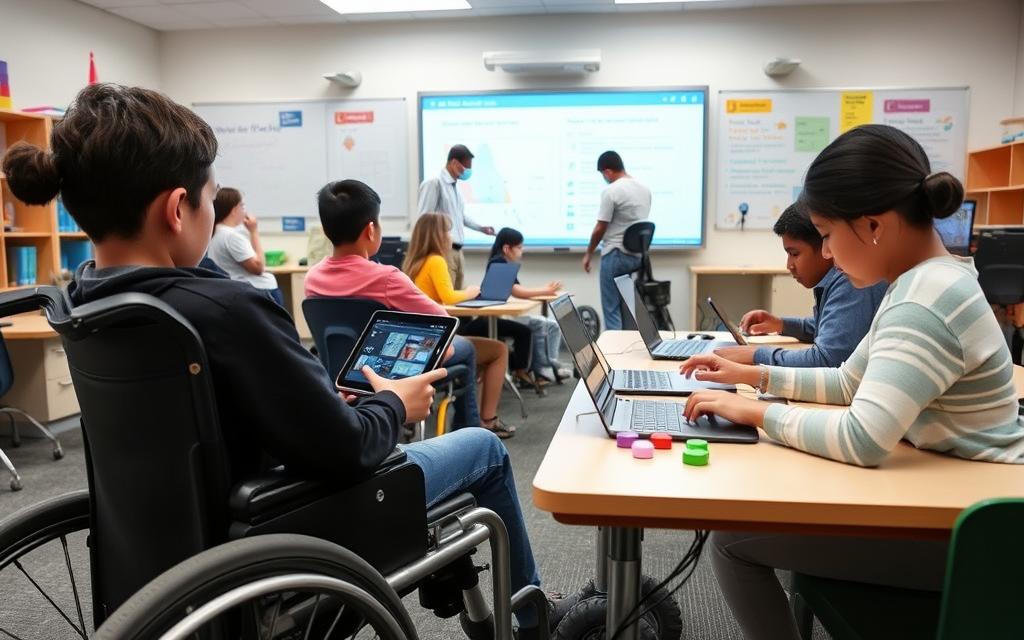
Technology for Students with Special Educational Needs
Educational technology has changed the game for students with different abilities. It makes classrooms more inclusive, where everyone can do well. Now, tools and methods help students with physical, cognitive, or learning challenges to get a good education.
Assistive Technologies and Accessibility Tools
Today’s classrooms use assistive technology in schools to break down learning barriers. These tools help students with disabilities to join in with their classmates.
Screen Readers, Speech-to-Text and Text-to-Speech Software
Software like JAWS and NaturalReader turn digital text into speech for visually impaired students. Speech recognition programs change spoken words into text for those with mobility or writing issues. These accessibility tools for learning help all students share their knowledge.
Adaptive Hardware for Physical Accessibility Challenges
There’s special equipment like alternative keyboards, eye-tracking devices, and adaptive switches. These tools help students with physical challenges to use digital tools and do their work on their own. This hardware is key to making learning accessible for everyone.
| Technology Type | Primary Function | Beneficiary Groups |
|---|---|---|
| Screen Readers | Text-to-audio conversion | Visually impaired students |
| Speech-to-Text Software | Voice command processing | Students with mobility issues |
| Adaptive Keyboards | Customised input methods | Students with motor skill challenges |
Individualised Education Programme Support
Technology boosts IEP technology support by giving teachers tools for personal learning plans. Digital systems make it easier to create educational plans that fit each student’s needs.
Technology-Enabled Customised Learning Approaches
Educational software can adjust content difficulty as students work. It offers different ways to present information, like visual, auditory, or tactile. This makes learning fit each student’s IEP goals.
Progress Monitoring and Reporting Tools
Digital platforms track student progress against IEP goals. Teachers can easily make detailed reports, showing where students need more help. These systems help teachers adjust their teaching based on student data.
Comprehensive IEP technology support systems help document student growth. They help teachers make informed decisions and keep records for parents and specialists.
How is Technology Helpful for Students: Critical Thinking Development
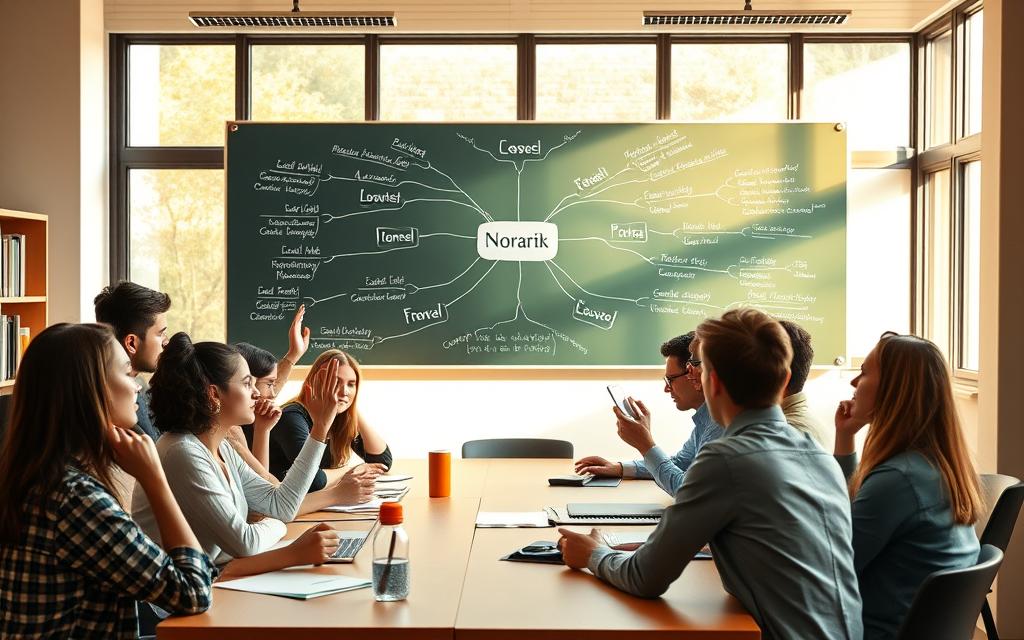
Technology is a big help for students in developing critical thinking skills. It moves them from just memorising to really thinking deeply. Digital tools let them see different views and solve complex problems.
Data Analysis and Research Tools
Today’s tech gives students top-notch tools for data analysis for students. It changes how they do research and check information. Now, they can dive into things instead of just reading about them.
Statistical software and data visualisation platforms
Tools like SPSS, Tableau, and Google Data Studio let students work with real data. They learn to spot trends, test ideas, and show their findings in cool ways. This hands-on learning boosts their ability to think quantitatively.
Developing analytical skills through technology-enabled research
Digital tools teach students to judge the trustworthiness of sources. They use online databases and search engines to find reliable research. This helps them pick and mix information wisely.
Project-Based Learning with Technology
Project-based learning technology gives students real-world challenges to tackle. It focuses on the journey, not just the end result. This encourages them to keep improving and work together to solve problems.
Real-world problem solving using digital tools
Students use digital tools to tackle real problems. They break down big issues into smaller parts. This helps them think systematically and find solutions.
Collaborative project management platforms
Tools like Trello, Asana, and Microsoft Teams help with group projects. Students work together, manage tasks, and track progress. They learn to work well together and find common ground.
Technology helps students develop critical thinking skills for school and life. It makes learning more meaningful by combining analysis and action.
Essential Technology Tools for Modern Students
Today’s education goes beyond books and pens. Students need digital tools to improve their learning and succeed in school. The right tech can change how they manage their work, time, and creativity.

Productivity and Organisation Applications
Being organised is key to doing well in school. Digital tools help students keep their work in order and stay focused.
Note-taking apps like Evernote and OneNote
Evernote and OneNote change how students take notes. They let students take notes on any device, with features like audio and images. Students can make digital notebooks for each subject, making studying easier.
Task management and calendar integration tools
Tools like Todoist and Google Tasks help students manage their tasks and deadlines. They work with calendars to remind students of important dates. This helps students stay on track with their studies and other commitments.
Creative and Multimedia Software
Technology also lets students show what they’ve learned through creative projects. Multimedia tools help students express themselves and learn new skills.
Adobe Creative Cloud for digital content creation
Adobe Creative Cloud offers top software for digital arts. It includes Photoshop and Illustrator for graphic design, and Premiere Pro for video editing. These tools are great for making presentations and artistic projects.
Video editing and graphic design platforms
Canva and iMovie are easy to use for beginners. They let students make professional-looking content without needing to learn a lot. These skills are useful in school and later in their careers.
| Tool Category | Primary Applications | Key Benefits | Skill Development |
|---|---|---|---|
| Productivity Apps | Evernote, OneNote, Google Tasks | Organised notes, deadline management | Time management, organisation |
| Creative Software | Adobe Creative Cloud, Canva | Digital content creation, design | Graphic design, multimedia skills |
| Collaboration Tools | Google Drive, Microsoft Office | File sharing, real-time editing | Teamwork, digital collaboration |
Learning Microsoft Office and Google Drive is very helpful for college and work. These tools help with teamwork and sharing documents. Knowing these organisation tools for study gives students an edge in school and later in their careers.
Preparing for Future Careers Through Technology Education
Educational technology is a key link between school and work. It helps students get hands-on experience with digital tools. This experience prepares them for the real world.
Technology in schools leads to better career paths. Students learn skills that employers want. This makes them ready for the future.
Industry-Relevant Software Training
Learning professional software gives students an edge in the job market. These tools are used in many industries. Students learn skills that employers value.
Schools now focus on teaching software skills. This means graduates are ready for the workforce. They learn both basic and advanced skills.
CAD software, financial modelling tools and professional applications
CAD programmes prepare students for careers in engineering and architecture. They learn to create precise drawings and models. Financial modelling tools teach analytical skills for banking and finance.
Students also learn about project management and data analysis. They get used to using software like in business. This makes it easier to start working.
Building portfolios through digital project work
Digital projects let students show off their skills. These projects are proof of their abilities when looking for jobs. They show technical skills and problem-solving.
Project-based learning is like real work challenges. Students work together and learn to solve problems. Their projects help them stand out in job interviews.
“Technology education provides the foundational skills that enable students to adapt to evolving workplace demands and emerging career opportunities.”
| Software Category | Industry Applications | Career Pathways | Skill Development Focus |
|---|---|---|---|
| CAD Programmes | Engineering, Architecture | Design Technician, Draftsperson | Technical drawing, Spatial reasoning |
| Financial Modelling Tools | Banking, Corporate Finance | Financial Analyst, Investment Banker | Data analysis, Forecasting techniques |
| Project Management Software | Construction, IT, Marketing | Project Coordinator, Team Lead | Organisation, Timeline management |
| Data Visualisation Platforms | Business Intelligence, Research | Data Analyst, Business Consultant | Pattern recognition, Presentation skills |
Digital Entrepreneurship Opportunities
Technology education opens doors to starting businesses. Students learn to use digital tools for business. This teaches them to be innovative and adaptable.
Students learn to create their own jobs. They gain confidence to start their own businesses. This hands-on experience is valuable.
E-commerce platforms and digital marketing tools
E-commerce platforms teach students about online stores. They learn about managing inventory and customer service. Students see the whole process of online sales.
Digital marketing tools help students target audiences and manage campaigns. They learn about SEO, social media, and analytics. These skills are useful in marketing.
Developing business skills through technology projects
Technology projects simulate real business challenges. Students learn to balance creativity with practicality. They develop critical thinking for product development and market positioning.
Collaborative projects teach teamwork and problem-solving. Students practice communication and project management. This builds confidence in managing digital projects.
The career preparation technology in modern education opens up many paths. As we discussed in our analysis of the technology impact on learning, it changes education. Students become ready professionals for their chosen fields.
Addressing Challenges and Responsible Technology Use
Today, it’s vital for students to know how to stay safe online. Technology brings many benefits, but it also brings new challenges. Students must learn to handle these responsibly.
Digital Citizenship and Online Safety
Digital citizenship education is key to using technology wisely. It teaches students to be aware and ethical in the digital world.
Students need to know how to keep their personal info safe online. This means spotting phishing scams and making strong passwords.
It’s also important to check privacy settings on social media and educational tools. Students should know what to share and what to keep to themselves.
Ethical Considerations in Digital Environments
What we do online can affect our real lives. Students must learn about digital manners and respecting others’ work.
Knowing about copyright laws and how to cite sources is essential. Digital citizens must think about how their actions online can impact others.
Balancing Screen Time and Digital Wellness
Good technology habits are important for learning. Finding the right balance between screen time and breaks helps avoid burnout.
Strategies for Healthy Technology Usage Habits
Here are some effective ways to stay healthy:
- Scheduled breaks during long computer use
- Places and times where technology is not allowed
- Using screens for focused tasks, not just browsing
Preventing Digital Fatigue and Maintaining Focus
To fight digital fatigue, try these:
- The 20-20-20 rule: look away from screens every 20 minutes
- Take breaks to move and stretch
- Manage tasks to avoid doing too many things at once
These tips help keep focus and improve digital health during learning.
Conclusion
Technology greatly helps students, making learning better and teaching more effective. This article has shown how it improves access to resources and personalises learning. It also helps students work together and get ready for their careers.
Technology is key in making students digitally literate and supporting all kinds of learners. It encourages critical thinking. Tools like Google Classroom and assistive software show how technology can change education.
The future of education looks bright with AI, VR, and adaptive technology. By using these innovations wisely, we can prepare students for a digital world. They will have the knowledge and skills needed to succeed.
FAQ
How has technology transformed traditional education methods?
Technology has changed education from old, teacher-focused ways to new, student-centred ones. Now, digital tools like interactive whiteboards and online resources make learning fun and accessible. Students can learn and develop skills better than before.
What are the benefits of digital libraries and Open Educational Resources?
Digital libraries and Open Educational Resources (OER) offer 24/7 access to lots of academic materials. OER, in particular, gives free, high-quality textbooks and resources. This makes education more affordable and accessible worldwide.
How does technology support personalised learning?
Technology helps with personalised learning through AI-powered platforms. These platforms adjust content and feedback based on each student’s progress. Learning Management Systems also track performance and help identify knowledge gaps, making learning more customised.
Why is digital literacy important for students today?
Digital literacy is key because it teaches students to evaluate online info, communicate digitally, and work in virtual teams. Learning to code and mastering these skills prepares students for a digital world.
How does technology facilitate collaborative learning?
Tools like Google Classroom and Microsoft Teams make group projects easy, even when students are apart. These platforms also help create global learning communities. Students from different cultures can work together, broadening their perspectives and improving teamwork skills.
Can technology make learning more engaging?
Yes, it can. Platforms like Kahoot and Duolingo use games and challenges to motivate students. Virtual and Augmented Reality offer immersive experiences, such as virtual field trips, making learning fun and interactive.
How does technology assist students with special educational needs?
Assistive technologies, like screen readers and speech-to-text software, help students with physical and learning challenges. Technology also supports Individualised Education Programmes by providing customised learning and precise monitoring, meeting each student’s needs.
In what ways does technology develop critical thinking skills?
Technology promotes critical thinking by giving access to data analysis tools and statistical software for real research. Project-based learning, enhanced by digital tools, encourages students to solve real-world problems. This develops their analytical, problem-solving, and teamwork skills.
What essential technology tools should students use for academic success?
Students should use productivity tools like Evernote and OneNote for organisation. Creative software, such as Adobe Creative Cloud, is also important for multimedia projects. These tools help manage workloads, express creativity, and build digital content creation skills.
How does technology prepare students for future careers?
Exposure to industry-standard software and digital entrepreneurship opportunities helps students develop relevant skills. This prepares them for the modern workforce by building professional portfolios and business acumen.
What are the key considerations for responsible technology use?
Responsible technology use means understanding digital citizenship, including cybersecurity and online privacy. It’s also important to balance screen time, adopt healthy digital habits, and prevent digital fatigue. This ensures technology remains a positive part of learning.
 Marcin Wieclaw