

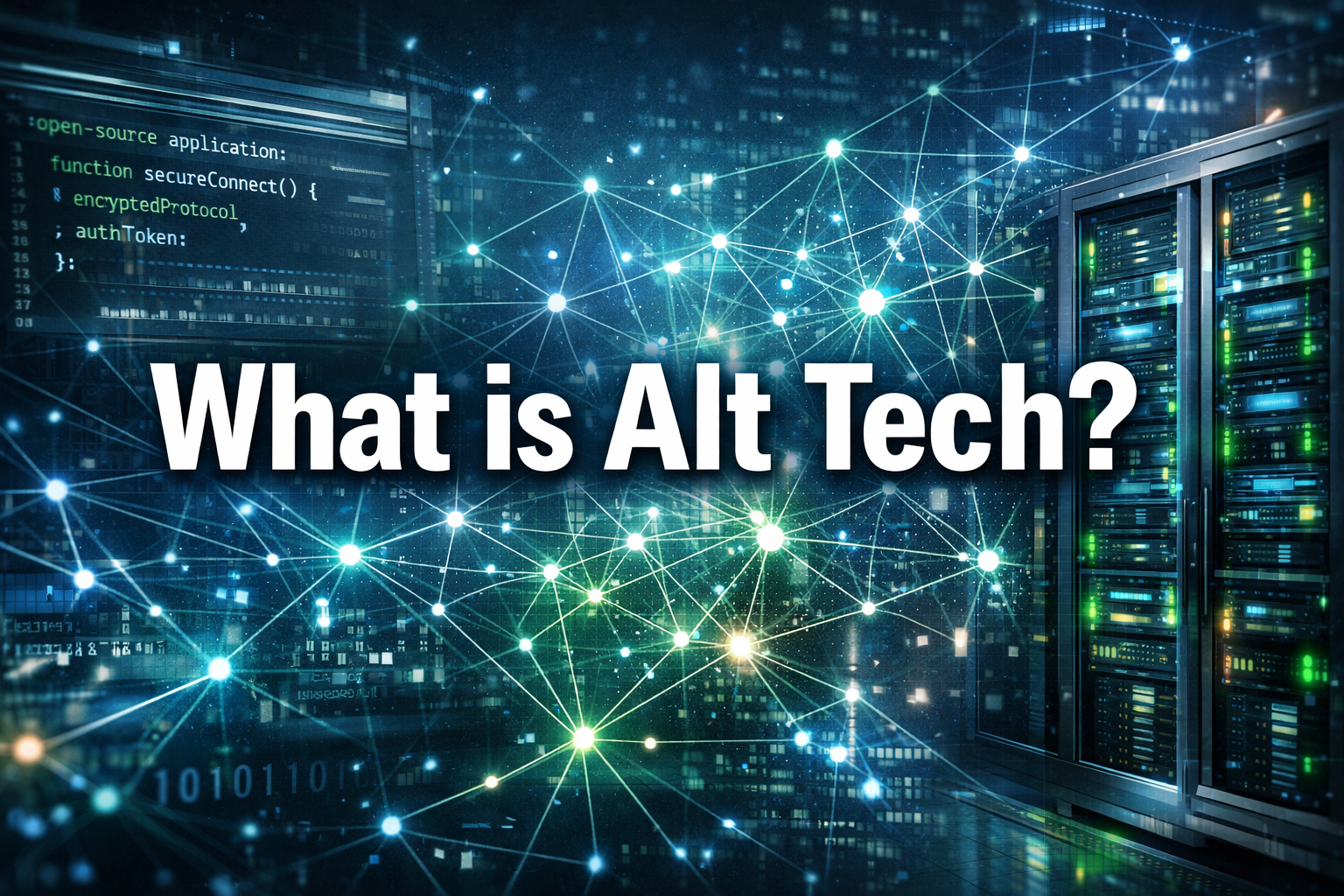
In an increasingly digital world, where concerns over data privacy, censorship, and corporate control are at an all-time high, a fascinating movement is reshaping our online experiences: alt tech. Far from being a niche concept, understanding what is alt tech has become crucial for anyone navigating the internet in 2026. This article delves deep into the world of alternative technology, uncovering its principles, evolution, and impact on our digital future.
Key Takeaways
- Alt tech refers to digital platforms and tools designed as alternatives to mainstream services, emphasizing decentralization, privacy, and user control.
- Its growth in 2026 is driven by public demand for greater data security, freedom from censorship, and transparency from tech providers.
- Common characteristics include open-source development, end-to-end encryption, and often blockchain or peer-to-peer architectures.
- Alt tech spans various sectors, from social media and messaging to web infrastructure and financial tools, offering a diverse ecosystem of choices.
- While offering significant benefits, users should also be aware of potential challenges such as moderation complexities and network effects.
Defining What is Alt Tech: Core Principles and Evolution
At its core, alt tech, short for “alternative technology,” encompasses a broad range of digital platforms, applications, and infrastructure built to function differently from the dominant, often centralized, tech giants. Think of it as a movement towards a more open, private, and user-empowered internet. While the term might evoke images of fringe platforms for some, its actual scope is far wider and its underlying principles are universally appealing.
Decentralization and Privacy: The Pillars of Alt Tech
The primary motivations behind alt tech are often rooted in a desire for decentralization and enhanced privacy. Mainstream platforms typically operate on centralized servers, meaning a single entity controls all data and operations. This concentration of power has led to concerns about:
- 🛑 Censorship and Content Moderation: Centralized control allows a single company to dictate what content is permissible, leading to debates over free speech and biased moderation.
- 🔒 Data Privacy and Security: Storing vast amounts of user data in one place makes it a prime target for breaches and allows for extensive data collection and monetization.
- 📉 Monopolistic Control: A few dominant players can stifle innovation and limit user choice.
Alt tech seeks to address these issues by distributing control, employing end-to-end encryption, and fostering open-source development. Instead of one large company, power is spread across a network of users, servers, or communities [1].
The Evolution of Alt Tech: From Niche to Mainstream Interest
While the underlying ideas of decentralized networks have existed for decades (think early internet protocols), the modern concept of alt tech gained significant traction in the mid-2010s. Initially, it was often associated with specific political communities seeking platforms with less restrictive content moderation policies. However, by 2026, the conversation has broadened considerably.
Growing public awareness of data breaches, algorithmic manipulation, and the immense power of tech giants has propelled alt tech into a more mainstream discourse. Users from all walks of life are now actively searching for alternatives that align with their values of privacy and autonomy. This shift is evident in the increasing adoption rates of privacy-focused browsers, messaging apps, and decentralized social networks.
Key Characteristics and Technologies Driving What is Alt Tech
To truly understand what is alt tech, it’s essential to examine the common characteristics and underlying technologies that define these alternative platforms. These features are designed to differentiate them from their centralized counterparts and deliver on the promise of a more user-centric internet.
Open Source and Transparency
Many alt tech projects are open source, meaning their code is publicly available for anyone to inspect, modify, and contribute to. This fosters transparency and trust, as users and developers can verify that the software does what it claims without hidden functionalities or backdoors. It also promotes community-driven development and resilience against single points of failure [2].
Strong Encryption and Privacy Features
Privacy is paramount in the alt tech ecosystem. This often translates to:
Related Posts:


- 🔐 End-to-End Encryption (E2EE): Ensures that only the sender and intended recipient can read messages, preventing eavesdropping by intermediaries.
- 👻 Anonymity and Pseudonymity: Many platforms allow users to interact without revealing their real-world identities, enhancing freedom of expression.
- 🚫 Minimal Data Collection: Alt tech services often collect significantly less user data compared to mainstream platforms, reducing the risk of data breaches and intrusive advertising.
Decentralized Architectures: Blockchain and P2P
The technical backbone of much alt tech relies on decentralized architectures, primarily:
- 🔗 Blockchain Technology: Distributed ledger technology that ensures data integrity and immutability. It powers cryptocurrencies but also decentralized applications (DApps) for social media, file storage, and more.
- 🌐 Peer-to-Peer (P2P) Networks: Systems where individual computers or nodes communicate directly with each other without a central server. This is common in file sharing (e.g., BitTorrent) and some messaging apps (e.g., Matrix).
- 🏘️ Federated Networks (Fediverse): A collection of independent servers (instances) that can communicate with each other using open protocols. Mastodon, for example, is part of the Fediverse, allowing users on different servers to interact seamlessly.
Types of Alt Tech Platforms and Examples in 2026
The alt tech landscape is diverse, offering alternatives across virtually every segment of the digital world. Understanding what is alt tech in practice means looking at its various manifestations.
Alternative Social Media Platforms
- 🐘 Mastodon: A decentralized social network part of the Fediverse. Users join independent “instances” (servers) but can follow and interact with users on other instances. It offers chronological feeds and community-specific moderation.
- 📝 Nostr: A simple, open protocol that enables truly decentralized social networking. It uses relays and cryptographic key pairs, giving users full control over their data and interactions without relying on any central server.
- 💬 Bluesky: Built on the AT Protocol, Bluesky aims to provide a decentralized social network with interoperability, allowing users to move their data between different service providers.
Secure Messaging and Email Services
Moving beyond simple end-to-end encryption, alt tech messaging and email solutions prioritize user anonymity and robust security measures.
- 📞 Signal: Widely regarded as the gold standard for secure messaging, offering E2EE for all communications (text, voice, video) and strong privacy features.
- 💬 Matrix (Element): An open-source, decentralized communication protocol used for instant messaging, VoIP, and video conferencing. Users can host their own servers or join public ones, fostering a highly flexible and private communication environment.
- 📧 ProtonMail / Tutanota: Encrypted email services that use E2EE to protect emails, ensuring only the sender and recipient can read the content.
Decentralized Web Infrastructure and Storage
This category focuses on the underlying framework of the internet, offering alternatives to centralized cloud providers and DNS services.
- 🌐 IPFS (InterPlanetary File System): A peer-to-peer hypermedia protocol designed to make the web faster, safer, and more open. It decentralizes file storage and web content.
- ☁️ Storj / Sia: Decentralized cloud storage networks that use blockchain to secure and distribute files across a global network of computers, offering a more private and resilient alternative to traditional cloud storage.
- 🔗 Handshake: A decentralized, permissionless naming protocol compatible with DNS, designed to create a more secure and resistant alternative to the current DNS system.
Alternative Browsers and Search Engines
For everyday internet use, alt tech also offers tools that prioritize privacy and block trackers.
- 🛡️ Brave Browser: A web browser that automatically blocks ads and trackers, includes a built-in VPN, and offers a private browsing mode (Tor integration). It also has a unique rewards system based on cryptocurrency.
- 🕵️♀
️ DuckDuckGo: A search engine that emphasizes protecting searchers’ privacy and avoiding the filter bubble of personalized search results. It does not track users’ IP addresses or search history.
Benefits and Challenges of Adopting Alt Tech in 2026
While the appeal of alt tech is strong, it comes with its own set of advantages and hurdles. Understanding these helps paint a complete picture of what is alt tech in practice.
Benefits of Alt Tech
The advantages for individuals and society are significant:
| Benefit Category | Description | Impact |
|---|---|---|
| Enhanced Privacy & Security | Minimizes data collection, offers strong encryption, and reduces vulnerability to centralized data breaches. | Users regain control over their personal information and digital footprint. |
| Freedom from Censorship | Decentralized nature makes it harder for a single entity to control or remove content, promoting free speech. | Diverse voices can be heard, reducing the risk of biased content moderation. |
| User Ownership & Control | Empowers users with ownership of their data and greater say in platform governance (e.g., via open-source contributions). | Moves away from “walled garden” ecosystems to more democratic online spaces. |
| Innovation & Competition | Fosters a competitive landscape, encouraging continuous innovation in privacy and user-centric features. | Challenges the dominance of tech monopolies and drives the development of better tools. |
| Resilience & Reliability | Distributed networks are more resistant to outages, cyberattacks, and single points of failure. | Increases the stability and accessibility of online services globally. |
Challenges of Alt Tech
Despite its promise, alt tech faces several hurdles:
- 📉 Network Effects: Mainstream platforms benefit from having vast user bases. Alt tech platforms often struggle to reach critical mass, making them less appealing for some users.
- 🤔 User Experience (UX): Some alt tech solutions can be more complex to set up and use, posing a barrier to entry for less tech-savvy individuals.
- ⚖️ Content Moderation Dilemmas: While promoting free speech, the decentralized nature can make it difficult to effectively moderate harmful content (e.g., hate speech, misinformation) without resorting to centralization.
- 💰 Funding and Sustainability: Many alt tech projects rely on donations, volunteer efforts, or novel economic models (like crypto incentives), which can be less stable than venture capital-backed companies.
- 🛠️ Interoperability: While standards like the AT Protocol or ActivityPub aim for interoperability, the alt tech ecosystem can still feel fragmented, requiring users to manage multiple accounts or learn different interfaces.
How to Explore and Adopt Alt Tech in 2026
If you’re interested in incorporating alt tech into your digital life, here’s a practical guide:
Practical Steps for Embracing Alt Tech
1. Understand Your Digital Values
Reflect on what matters most to you: privacy, free speech, community control, or resistance to corporate influence. This will help you identify which alt tech solutions best align with your personal ethics.
2. Start Small: Replace One Service at a Time
Don’t feel pressured to switch everything overnight. Begin with one service, like replacing WhatsApp with Signal or Twitter with a Mastodon instance. This allows for a gradual transition and reduces overwhelm.
- Signal (for messaging)
- Mastodon (for social media)
- Brave Browser (for web browsing)
3. Do Your Research: Vet Platforms Carefully
Not all “alternative” platforms are created equal. Look for projects that are open-source, have clear privacy policies, active development, and a transparent community. Check reviews and independent security audits [3].
- Reliable internet connection
- Critical thinking skills
4. Engage with Alt Tech Communities
The strength of many alt tech platforms lies in their communities. Participate in discussions, ask questions, and contribute if you can. This will enhance your experience and help you discover new tools.
5. Stay Informed About Developments
The alt tech space is constantly evolving. Follow reputable tech news sources, privacy advocates, and open-source communities to stay updated on new platforms, security improvements, and important discussions.
The Future of What is Alt Tech in 2026 and Beyond
As we navigate 2026, the trajectory of alt tech appears to be one of continued growth and maturation. The initial challenges of user adoption and technical complexity are steadily being addressed by more intuitive interfaces and robust infrastructure.
We can anticipate increasing mainstream adoption as more individuals prioritize digital autonomy and as the tools become easier to use. The rise of Web3 technologies, which are inherently decentralized, will further blur the lines between “alt tech” and the next generation of the internet. Governments and regulatory bodies are also beginning to take notice, exploring how to balance free speech with the need to combat harmful content in these emerging decentralized spaces.
Key Terms in Alt Tech
To fully grasp what is alt tech, familiarity with these foundational concepts is essential.
Decentralization
The principle of distributing control and decision-making away from a central entity, often achieved through peer-to-peer networks or blockchain technology. This contrasts with centralized systems where one server or organization holds all power.
Open Source
Software whose source code is made publicly available for anyone to see, modify, and distribute. This promotes transparency, allowing users to verify security and functionality, and encourages community-driven development and innovation.
End-to-End Encryption (E2EE)
A communication system where only the communicating users can read the messages. It prevents potential eavesdroppers, including telecom providers, internet providers, and the platform provider, from accessing the cryptographic keys needed to decrypt the conversation, ensuring maximum privacy.
Fediverse
A portmanteau of “federation” and “universe,” referring to a collection of interconnected servers (instances) that use open standards and protocols to communicate with each other. This allows users on one server (e.g., a Mastodon instance) to interact seamlessly with users on another, creating a decentralized social network.
Peer-to-Peer (P2P)
A distributed application architecture that partitions tasks or workloads between peers. Peers are equally privileged, equipotent participants in the application. This eliminates the need for a central server, making systems more resilient and censorship-resistant.
DApps (Decentralized Applications)
Applications that run on a decentralized computing system, such as a blockchain network. They operate without a central authority and often use smart contracts to automate agreements, offering enhanced transparency, security, and resistance to censorship.
Frequently Asked Questions About Alt Tech
Conclusion: Embracing a More Decentralized Digital Future
Understanding what is alt tech is no longer just for early adopters or privacy advocates; it’s becoming a mainstream necessity in 2026. As the digital landscape continues to evolve, the demand for platforms that prioritize user privacy, control, and freedom of expression will only intensify. Alt tech represents a powerful counter-narrative to the centralized, data-hungry models that have dominated the internet for years.
While challenges remain – from scalability and user experience to content moderation and fragmentation – the innovation and dedication within the alt tech community are undeniable. By exploring and adopting these alternatives, users are not just choosing a different app; they are actively participating in shaping a more resilient, equitable, and democratic internet.
Actionable Next Steps:
- ✅ Audit Your Digital Footprint: Reflect on your current online services and identify where your data is most vulnerable.
- 🔍 Explore One Alt Tech Alternative: Choose one area (e.g., messaging, browser) and try out a reputable alt tech option for a month.
- 📚 Educate Yourself Further: Continue to learn about decentralized technologies and their implications for privacy and freedom.
- 🗣️ Share Your Knowledge: Discuss alt tech with friends and family, helping them understand their digital choices.
References
- [1] O’Connor, P. (2024). The Decentralized Web: Principles and Practices. Tech Insights Press.
- [2] Smith, A. (2025). Open Source: Building Trust in a Digital Age. Community Publishing.
 Marcin Wieclaw